Introduction
One of the highlights of safari in Tanzania’s Serengeti National Park is the Great Migration when the wildebeest herds cross back and forth over the Mara River in the northern region of the park. This spectacular sight occurs during the dry months, July through October. For more information on safaris during the crossing season see the East Africa page.
Having already seen the river crossings twice and experienced safari in the dry season, I wanted to see the other end of the migration: calving season farther south in the Ndutu Plains, which lie within the Ngorongoro Conservation Area. The calving corresponds with the summer rains, from late January to early March, when the parks are much greener. Wildlife can be harder to spot and some days can be rainy, but the viewing is still excellent and there are often fewer vehicles competing for sightings.
The peak calving period, when roughly half a million calves are born within a couple of weeks, is tricky to catch because the rains are unpredictable. Although we timed our trip for the peak calving period in early to mid-February, the season itself peaked earlier than expected and many calves had already been born.
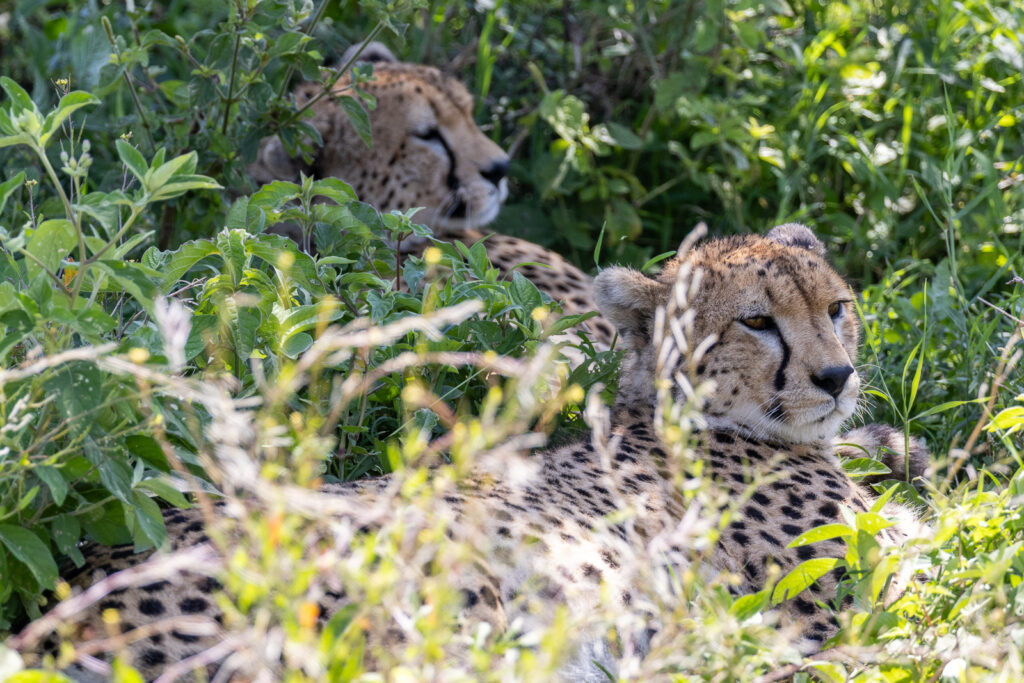
Another reason this season is so exciting is the concentration of predators drawn to the young calves. On this front we had great luck with many lion and cheetah sightings. I have never seen so many cheetahs on a single trip. One day we had five different sightings.
Our safari company, Roy Safaris, arranged for us to stay at Nyikani Migration Camp for several nights in Ndutu and then move to Serengeti Woodlands Camp near the Serengeti’s Naabi Hill Gate for another couple of nights. Because it is impossible to predict exactly where the wildlife will be, it is important to have flexibility in where you can drive from camp. From the second camp we could easily enter the central Serengeti, although it is a bit far, and had excellent cat sightings.
I’ve covered our week in Tanzania in three posts: Ndutu Plains and Southern/Central Serengeti, Parts 1 and 2. The latter includes our stay in Arusha at the beginning and end of the safari.
Southern/Central Serengeti Part 1
Day 4
Today we changed camps from Ndutu to Serengeti Woodlands Camp near the Naabi Hill Gate. It was an all-day transfer and game-drive day, leaving Nyikani Migration Camp just before 7.
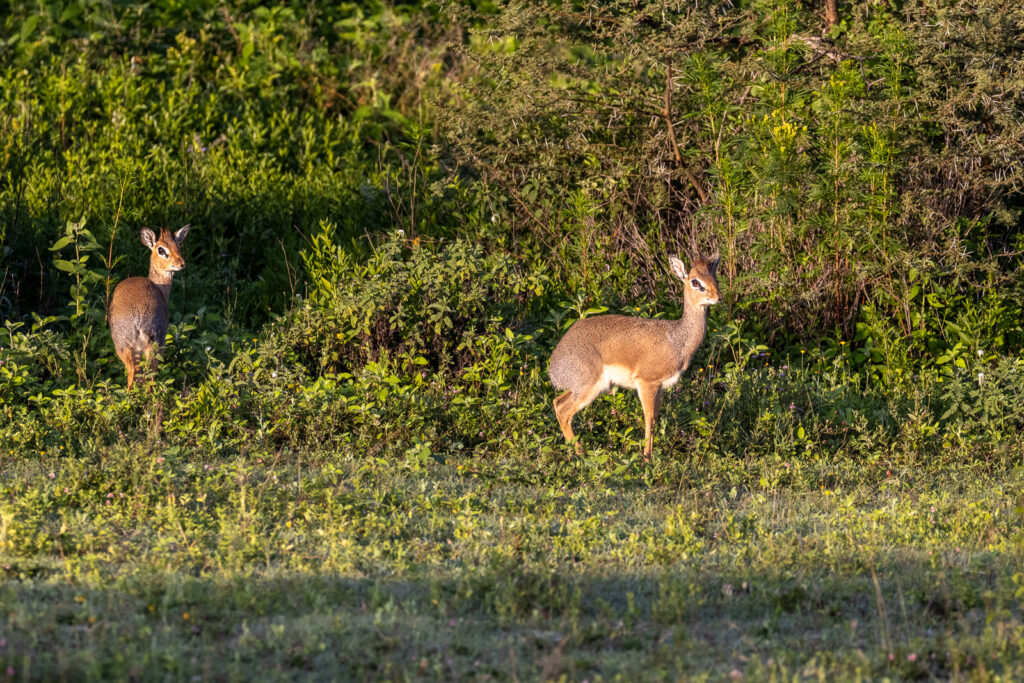
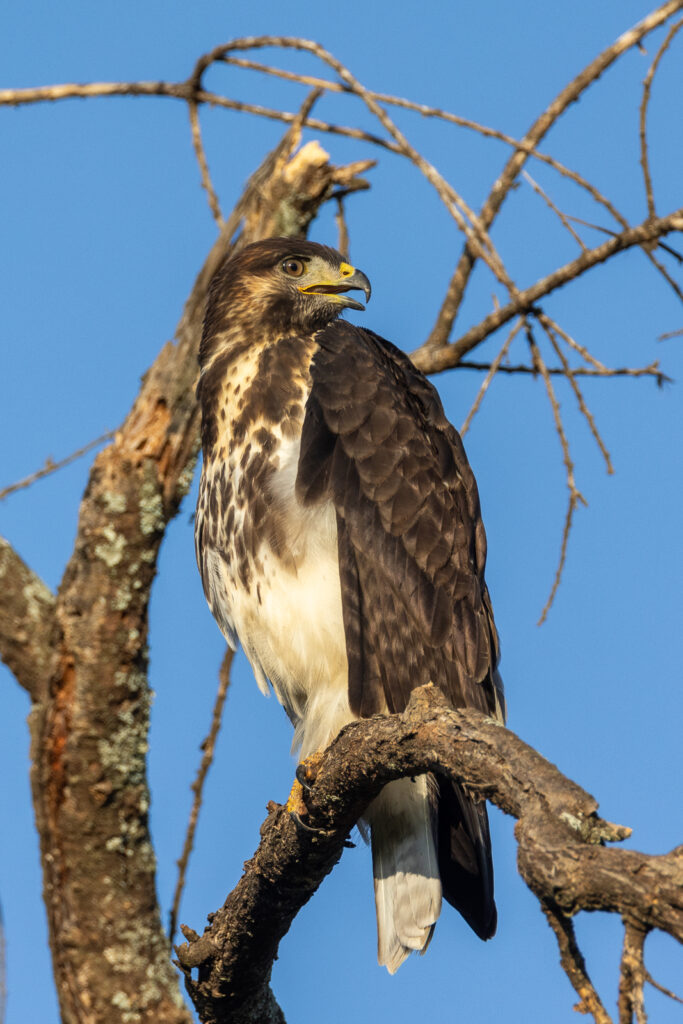
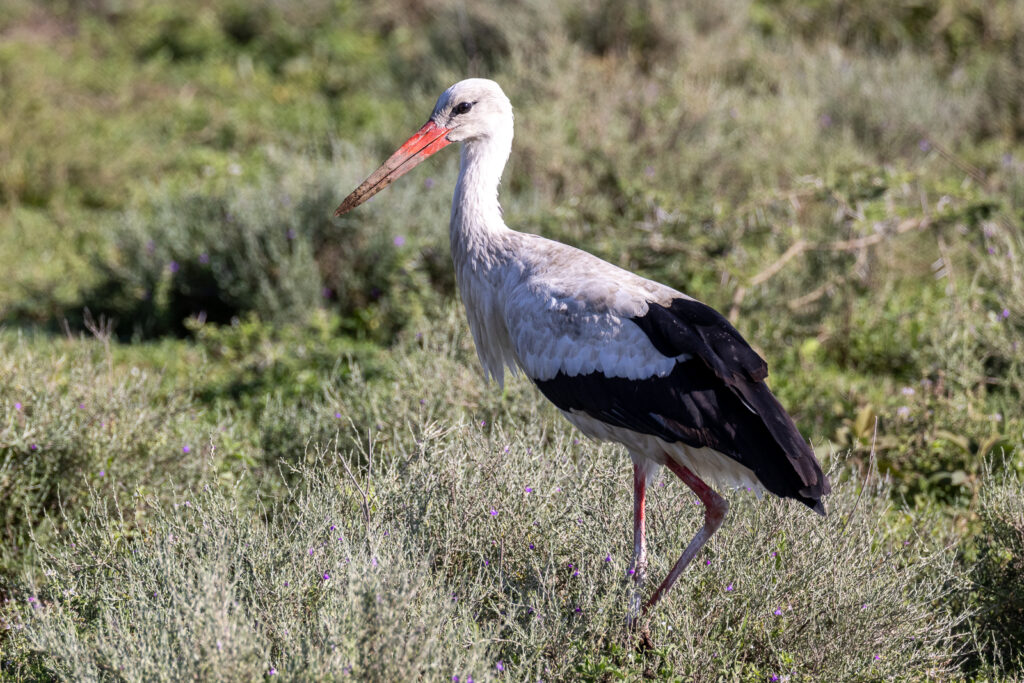
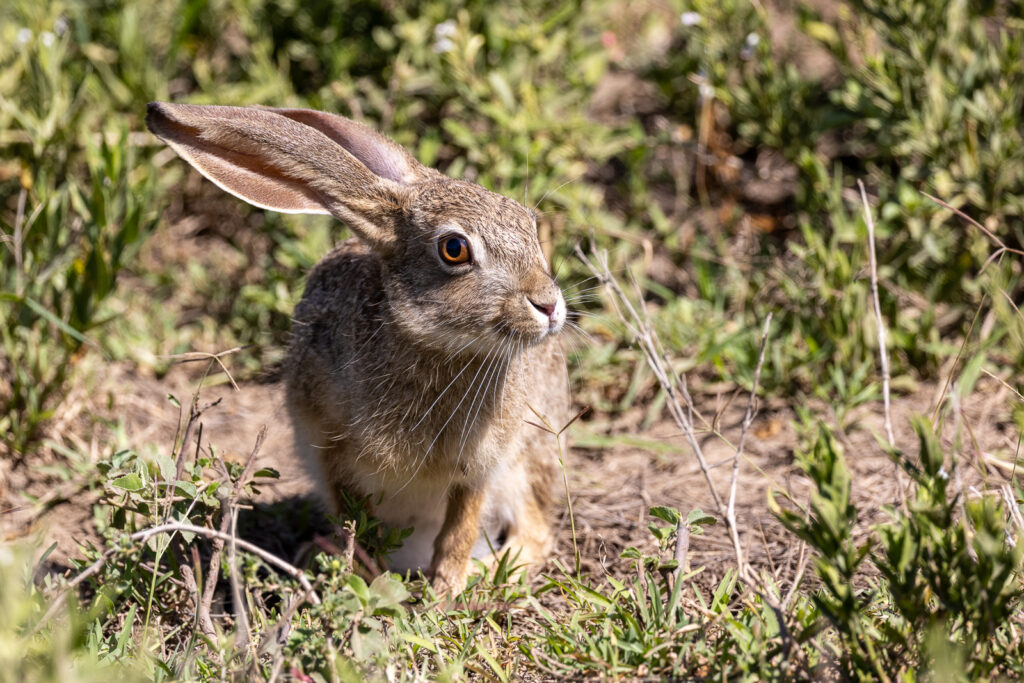
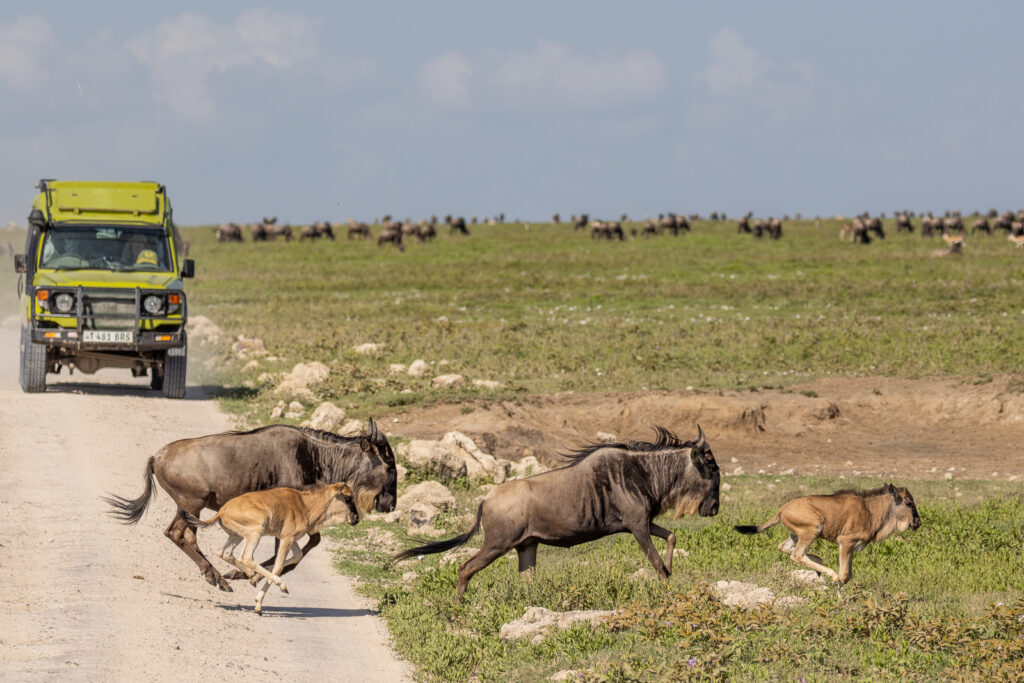
In the early morning light we drove through a wooded area of Ndutu. There were many dik-diks out, at least twenty or more. These small antelope mate for life and are usually seen in pairs.
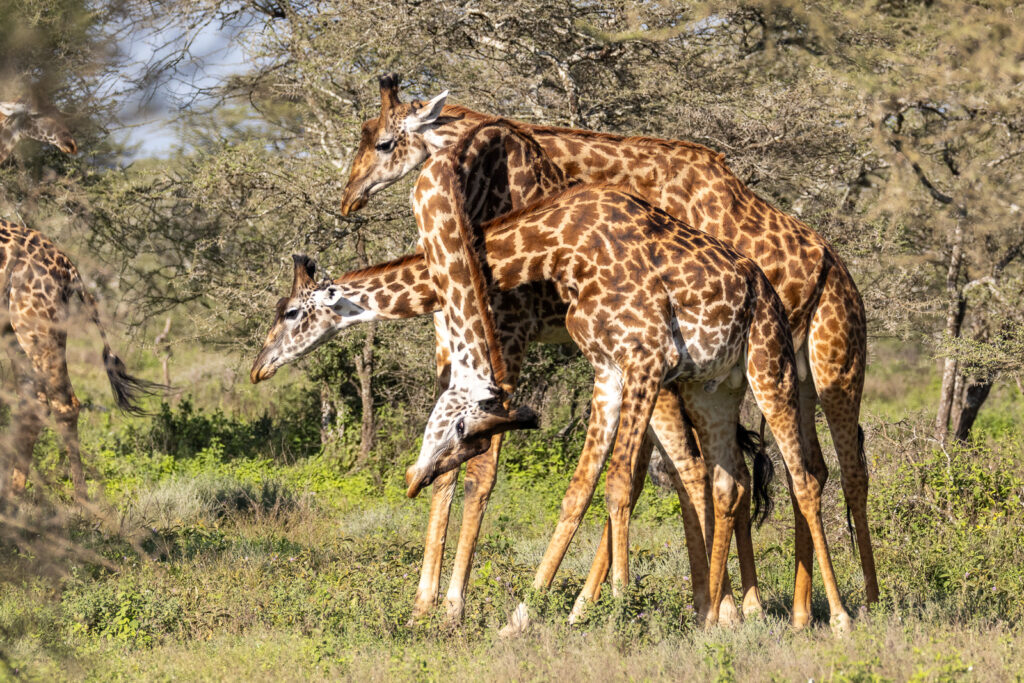
The most interesting sighting of the morning was a tower of giraffes, several of them play-fighting. They swung their necks and struck each other, and at one point four were involved before stopping after only a few moments.
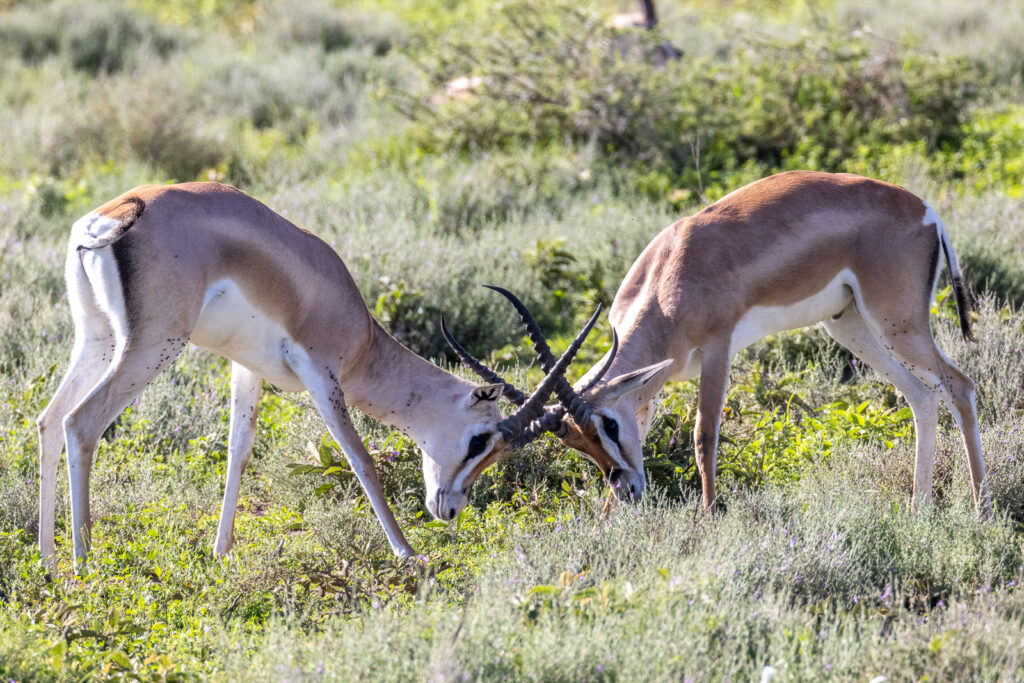
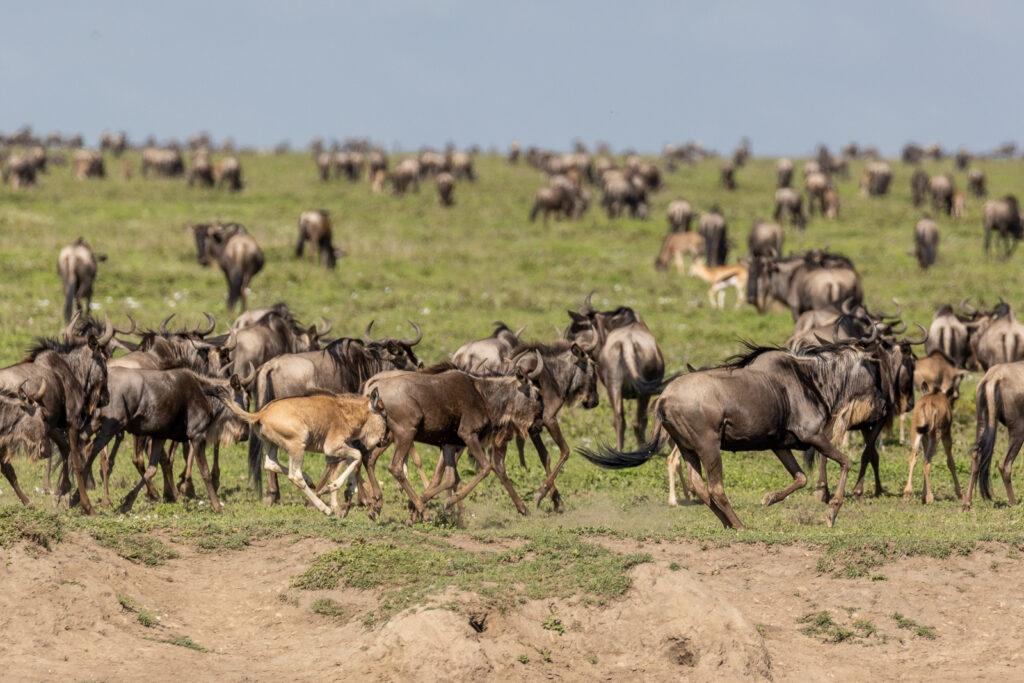
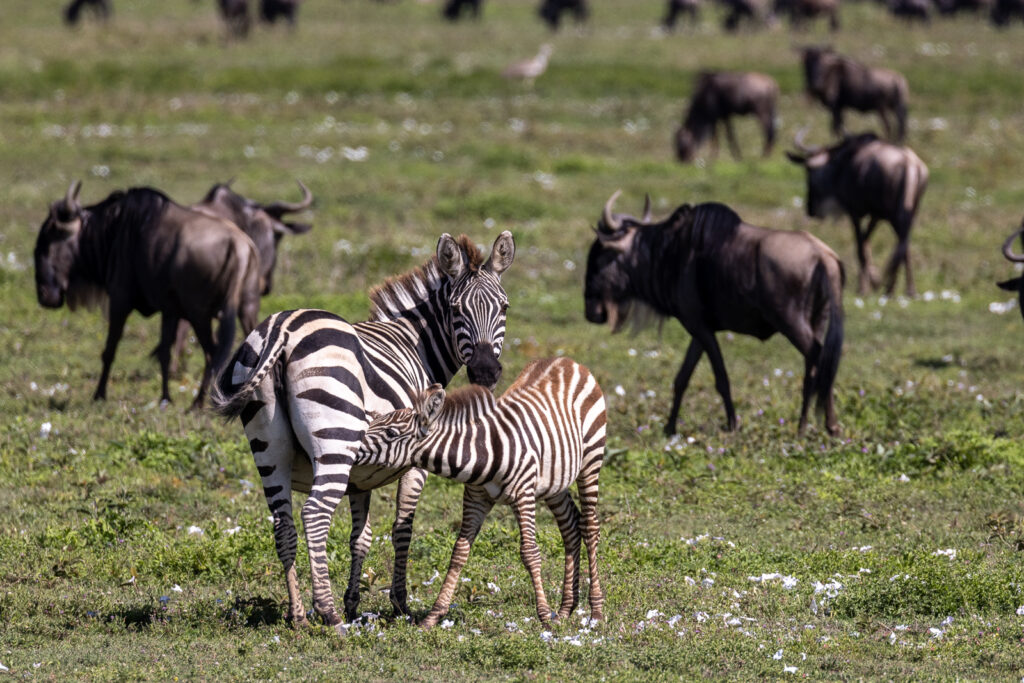
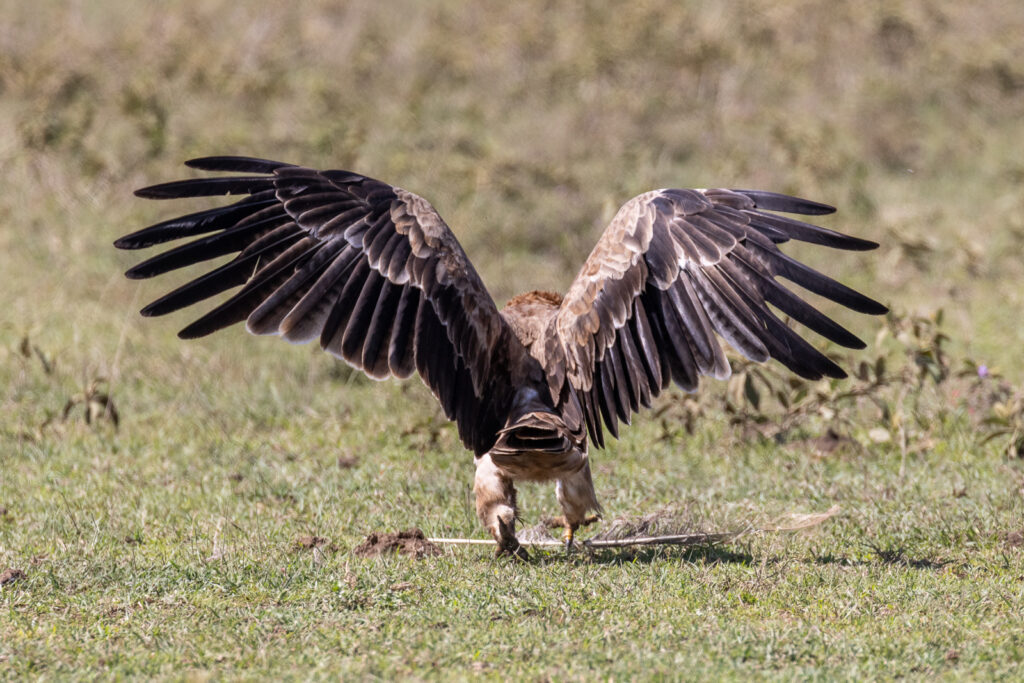
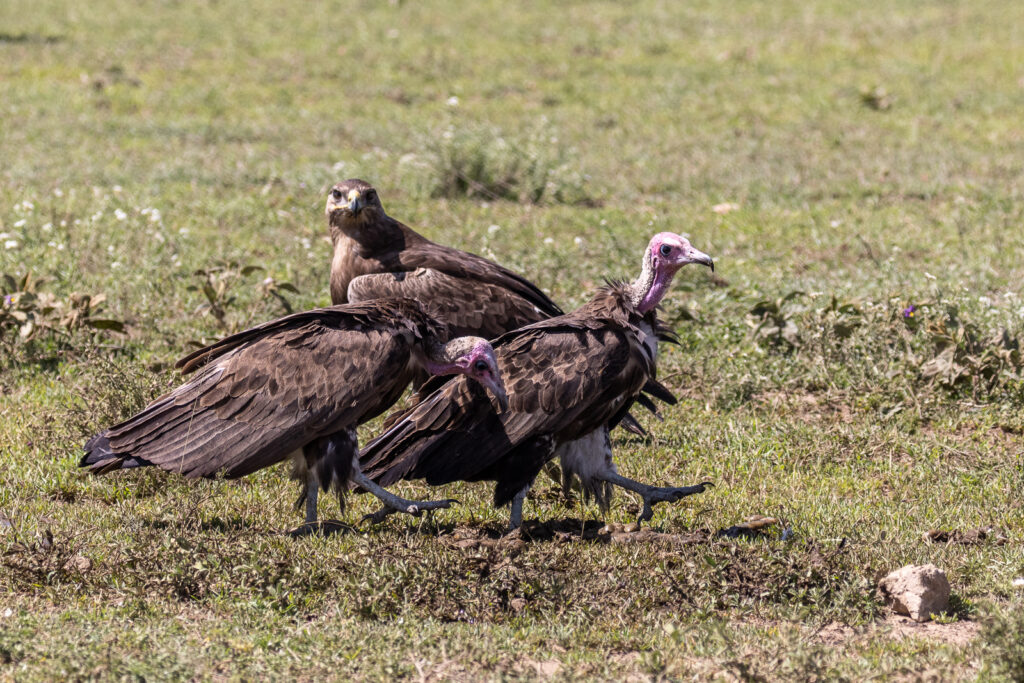
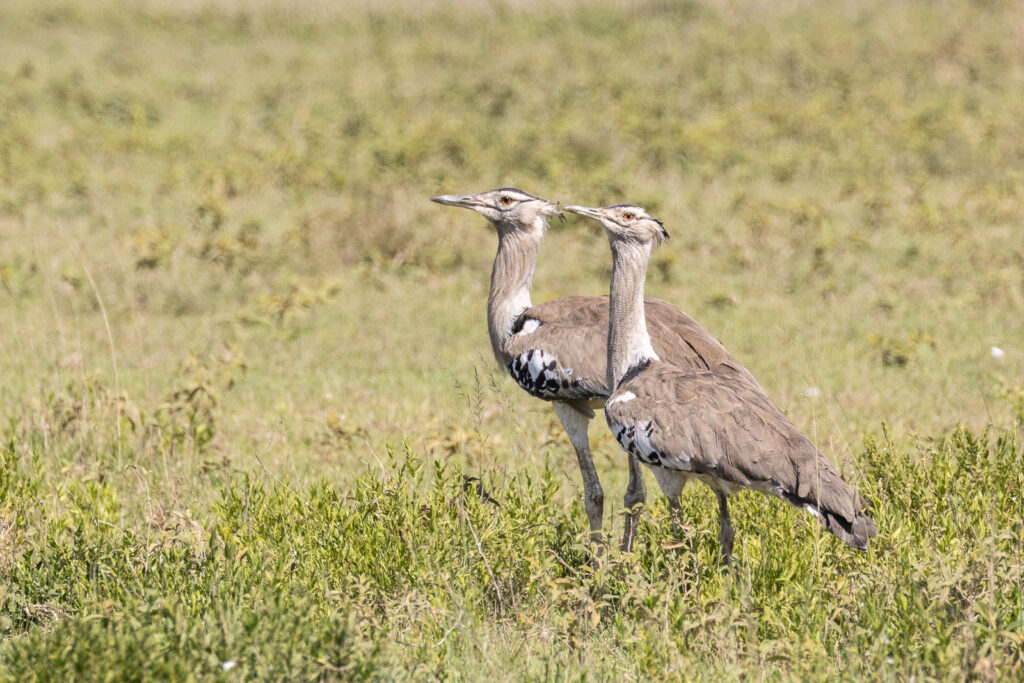
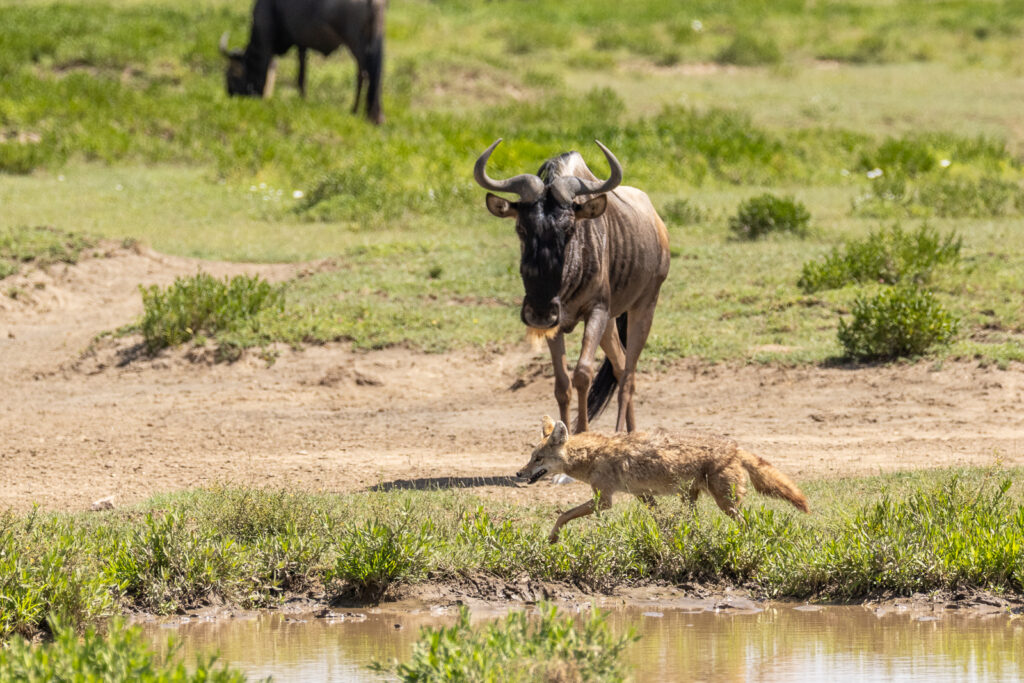
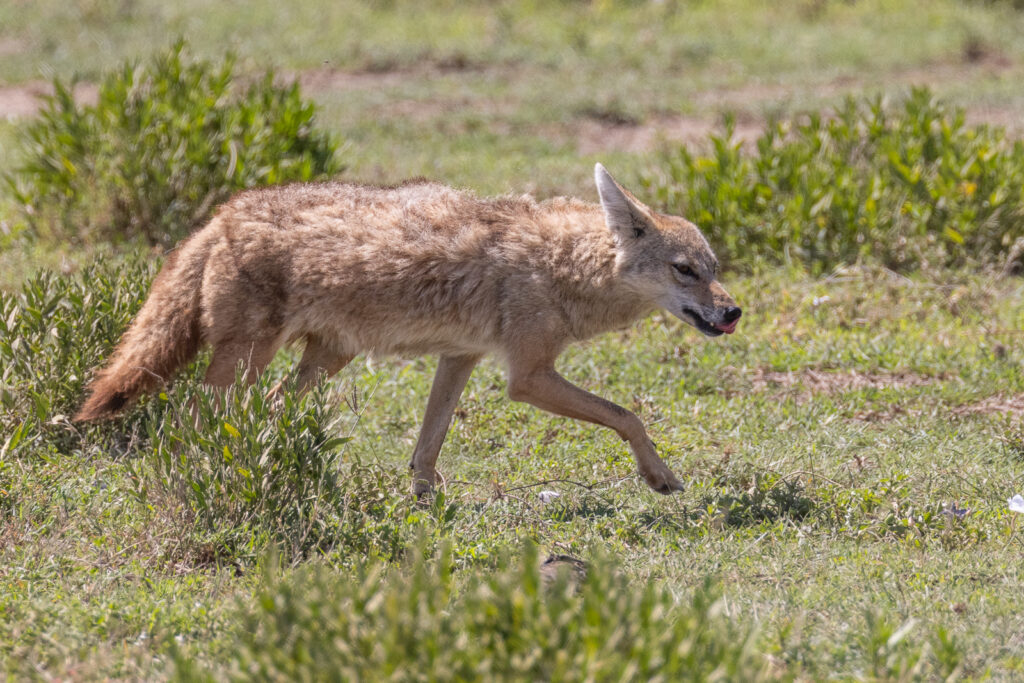
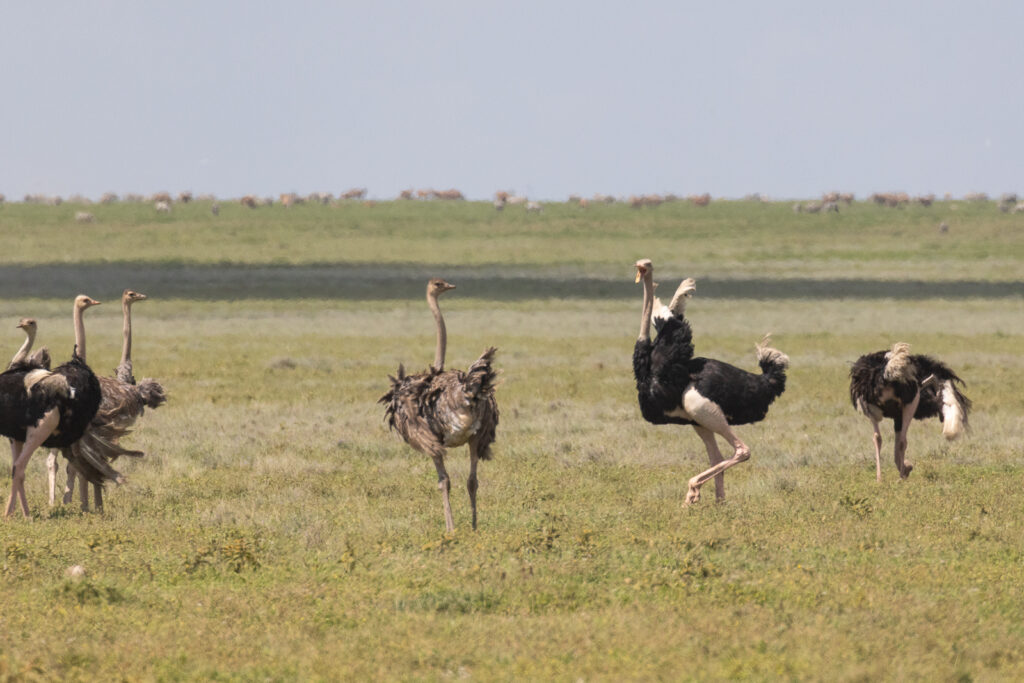
Leaving Ndutu and heading toward Naabi Hill Gate we crossed a long stretch of short-grass plains where a large herd was grazing, mostly wildebeest with gazelles, zebra and a few eland mixed in. Birds of prey dotted the fields, including eagles, storks and Kori bustards. We also saw a pair of jackals crossing the road. It was fun watching the herd, especially the new calves.
At Naabi Hill Gate Benjamin registered for the park and we stopped for lunch. The boxed lunch from Nyikani Migration Camp included chicken curry and rice, a roll with jam, a muffin, a chocolate bar and a juice box.
Central Serengeti
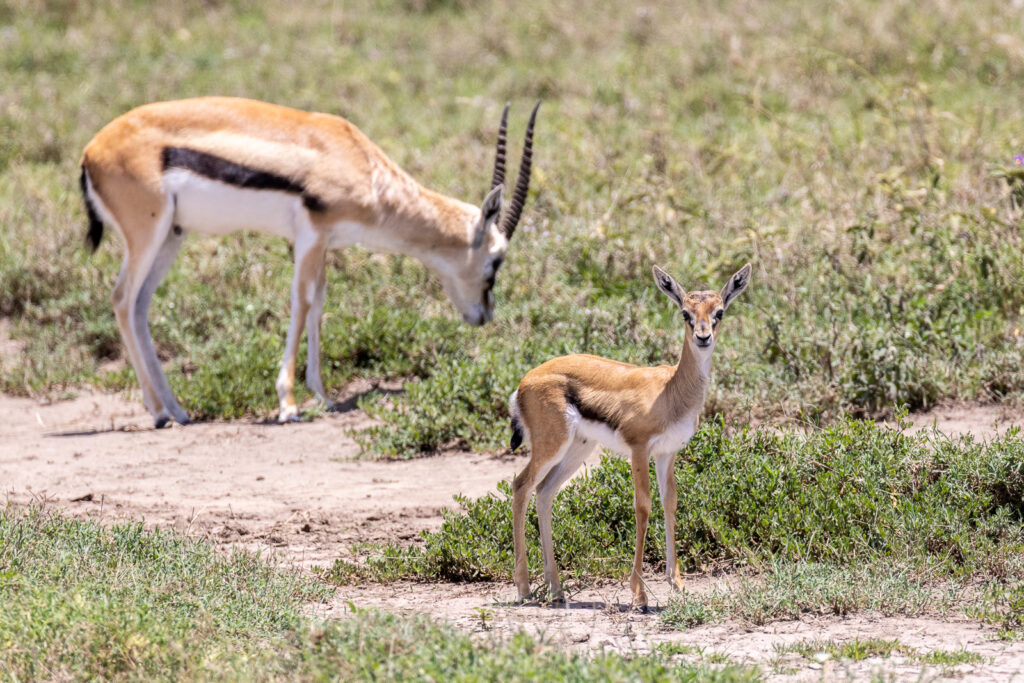
From the Naabi Hill Gate we drove north across the short-grass plains toward the central Serengeti. For a while the grasslands were empty, but soon we began seeing grazing animals again: zebra, gazelle, topi and eland. We searched the rock outcrops but found little at first.
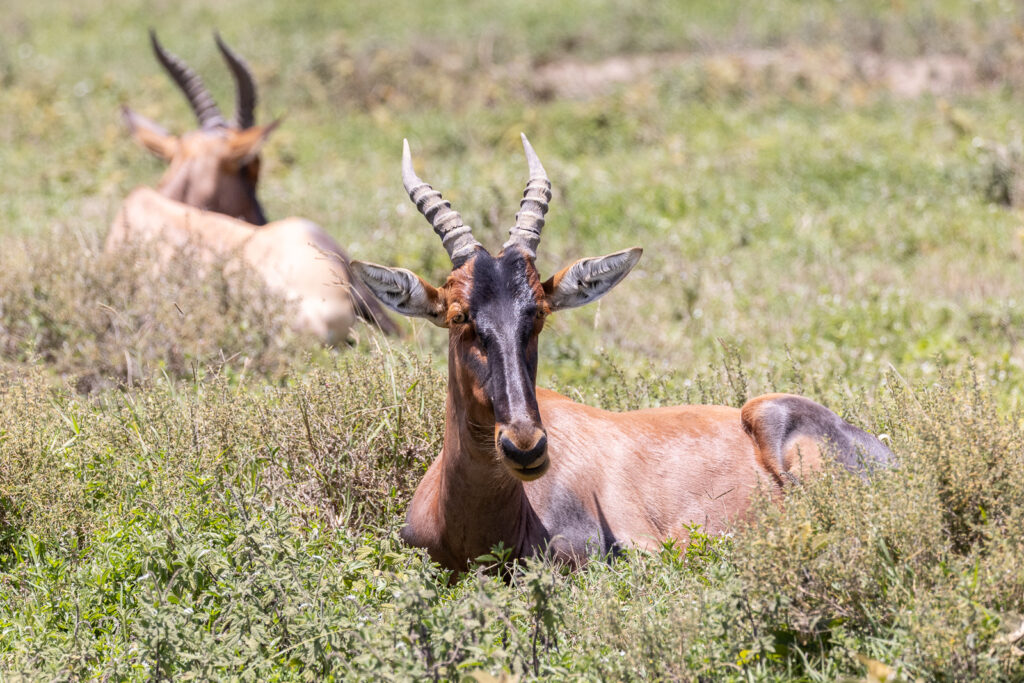
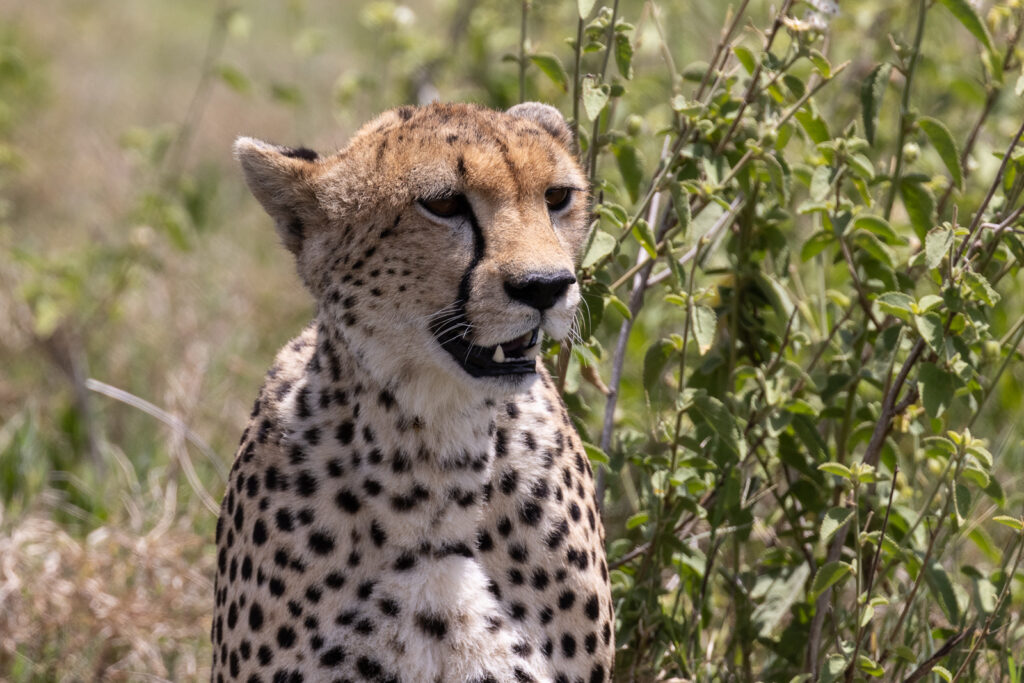
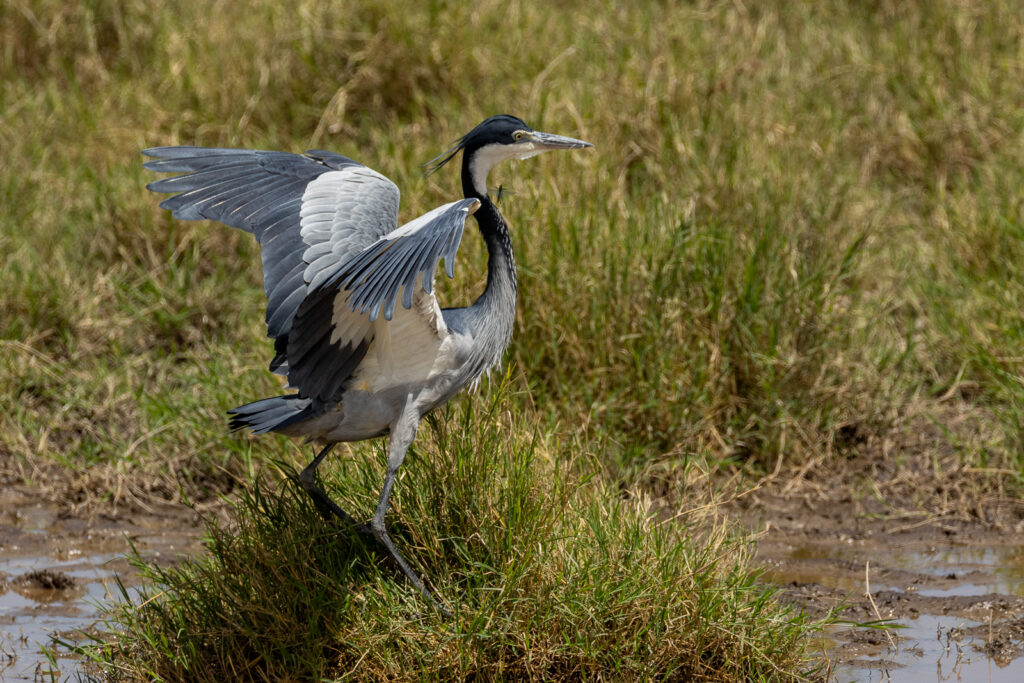
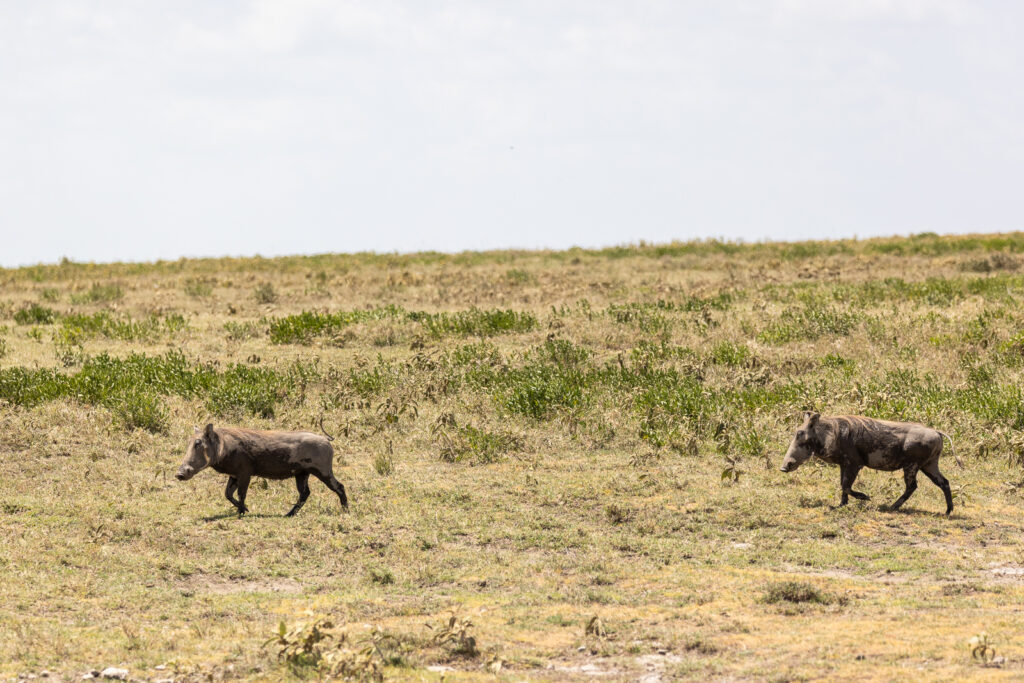
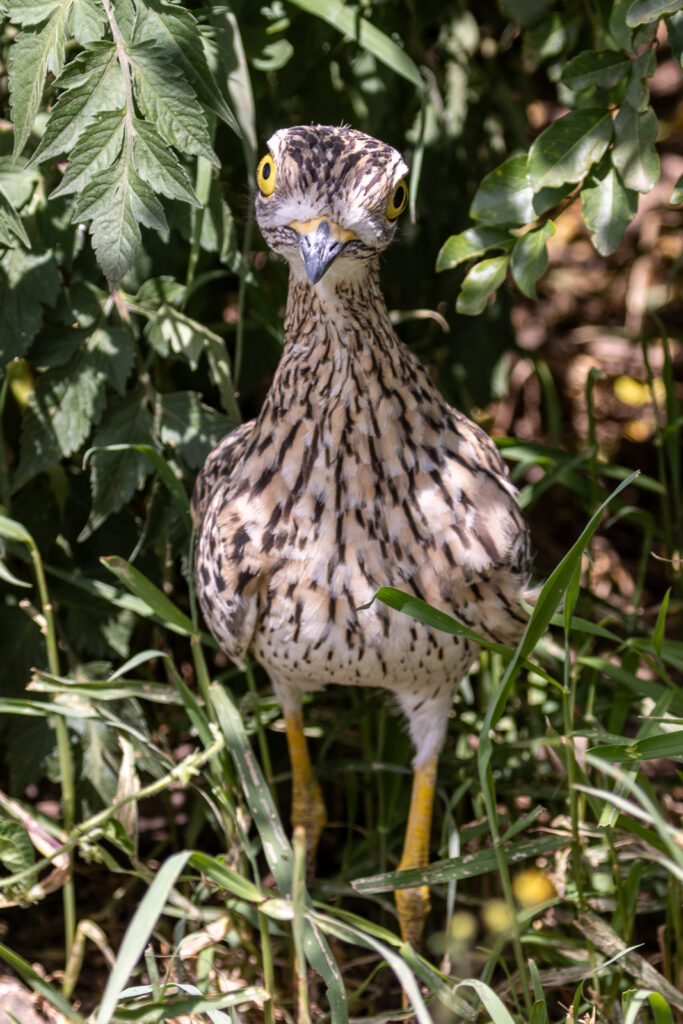
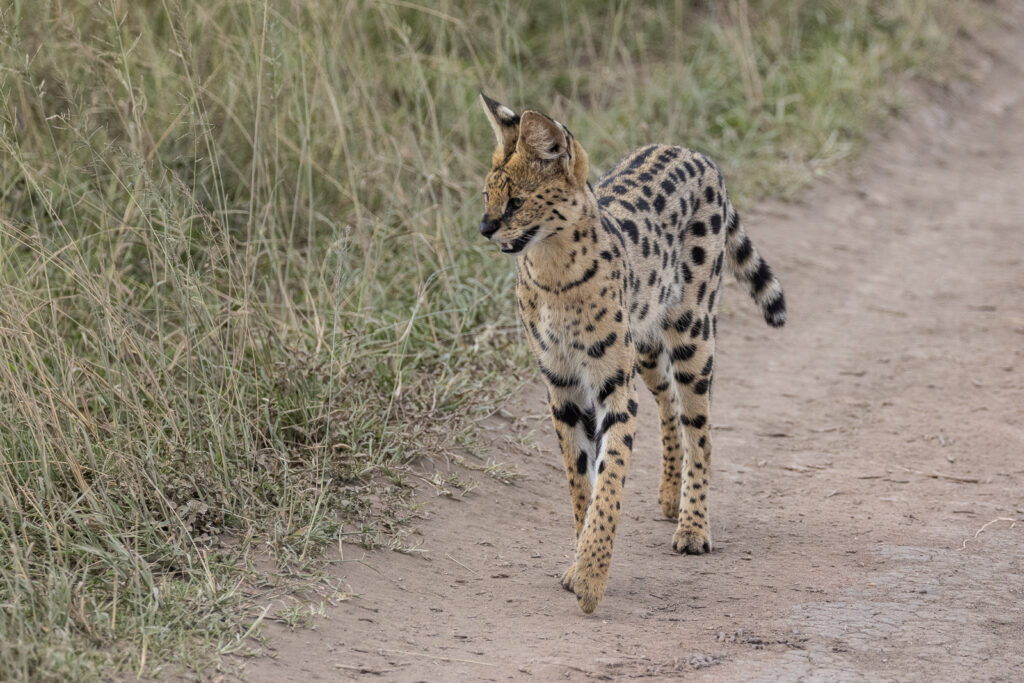
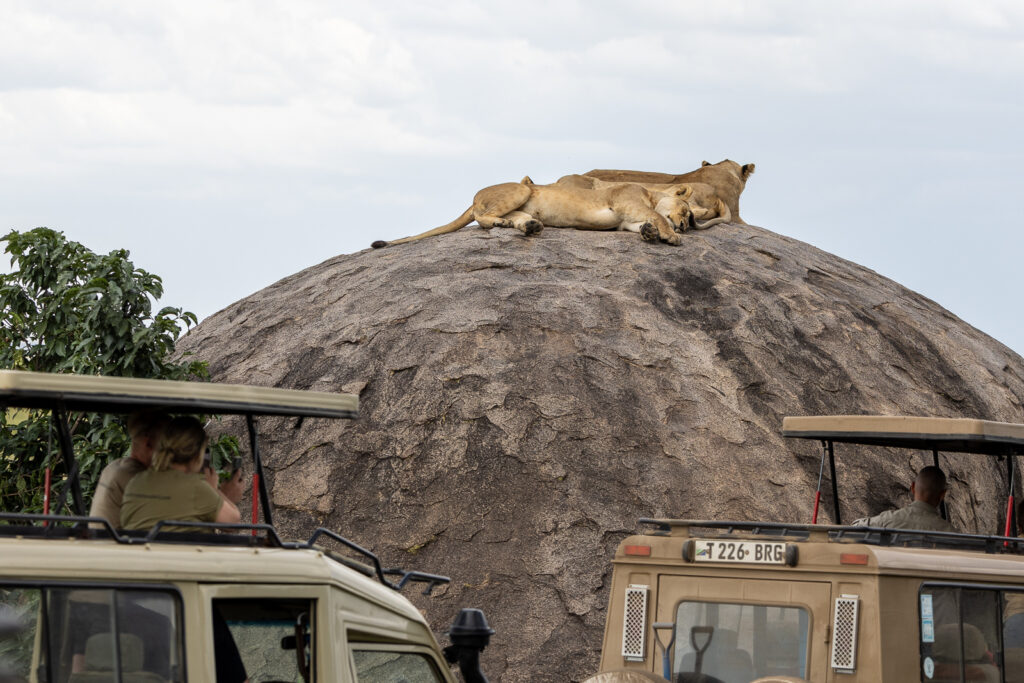
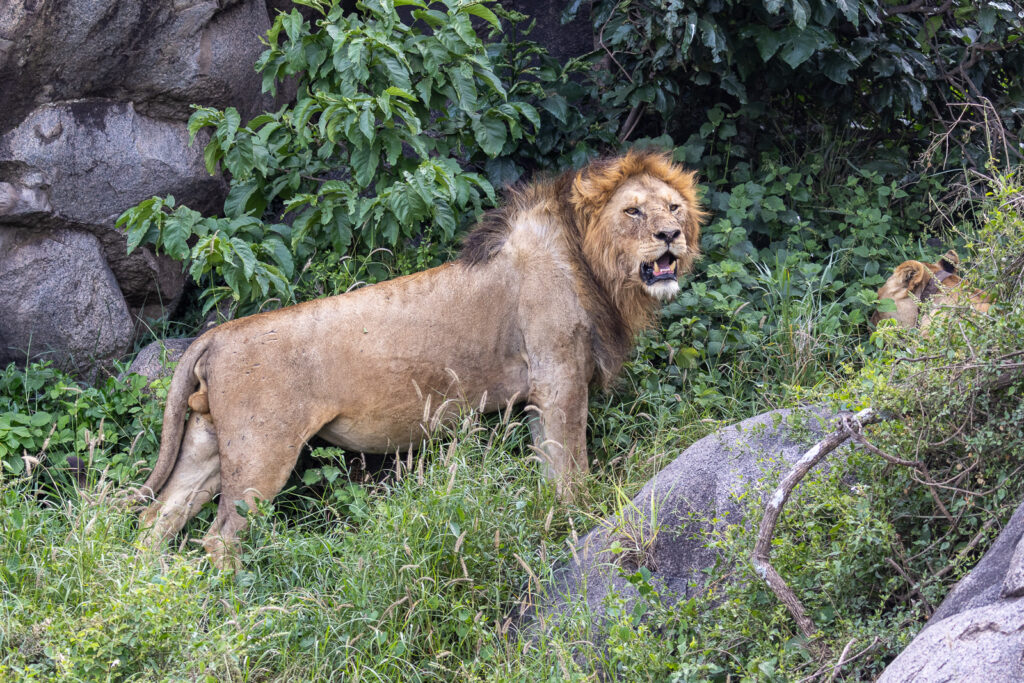
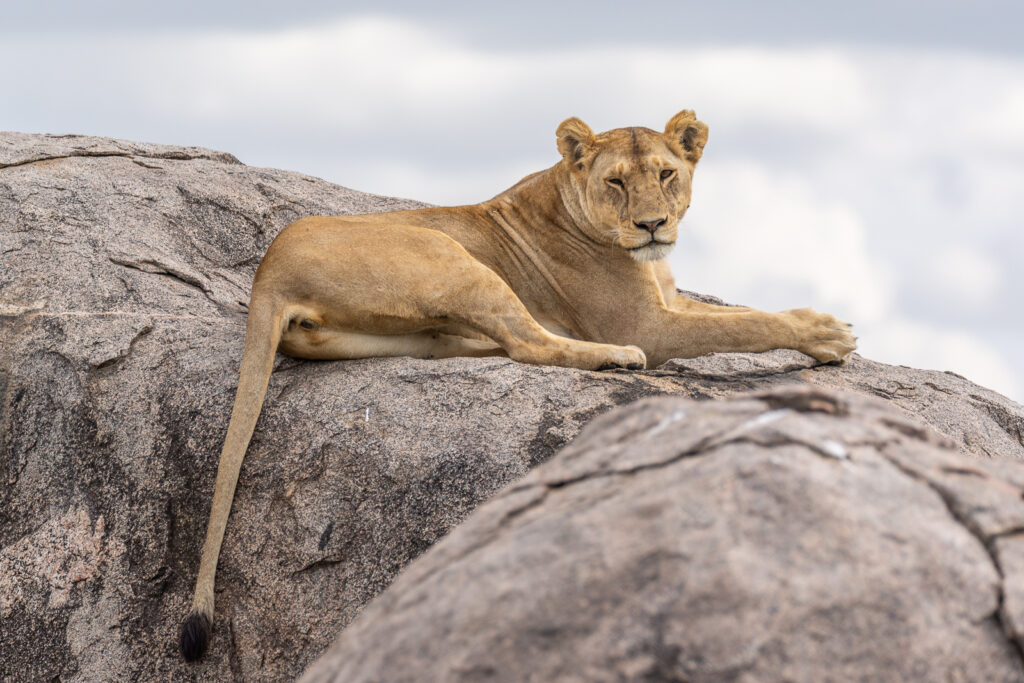
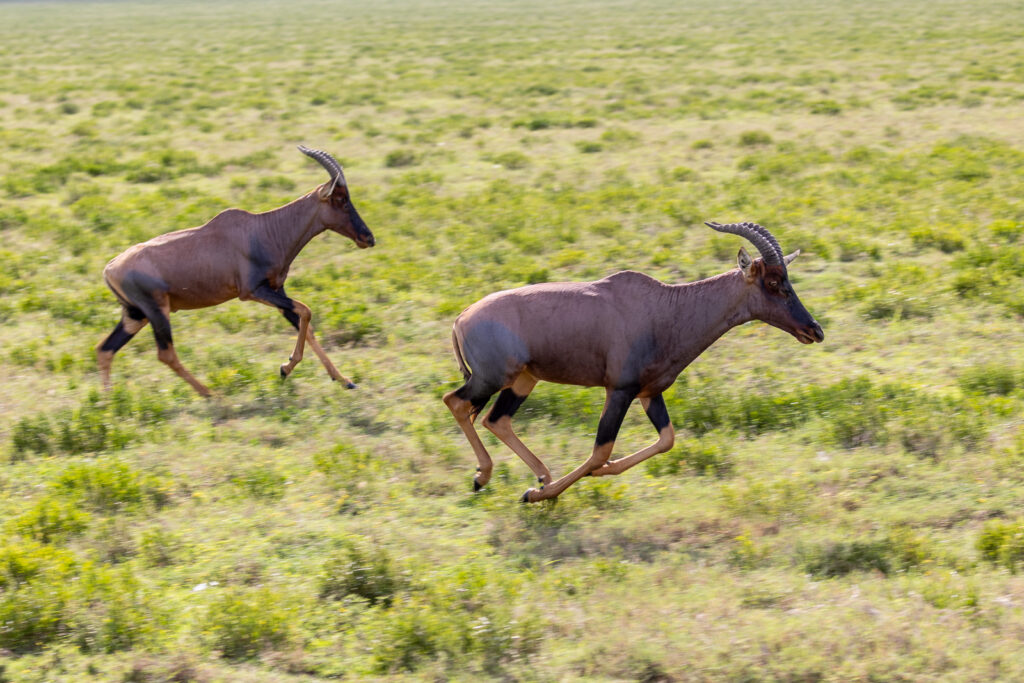
Farther north we found a cheetah stalking a small herd of topi with one young one. The three adults in front turned to face her, resulting in a long standoff until the topi slowly moved off. Once they left we approached the cheetah. She walked a short distance and sat in a bushy area where we got some nice photos of her in the sun before she lay down for an afternoon nap.
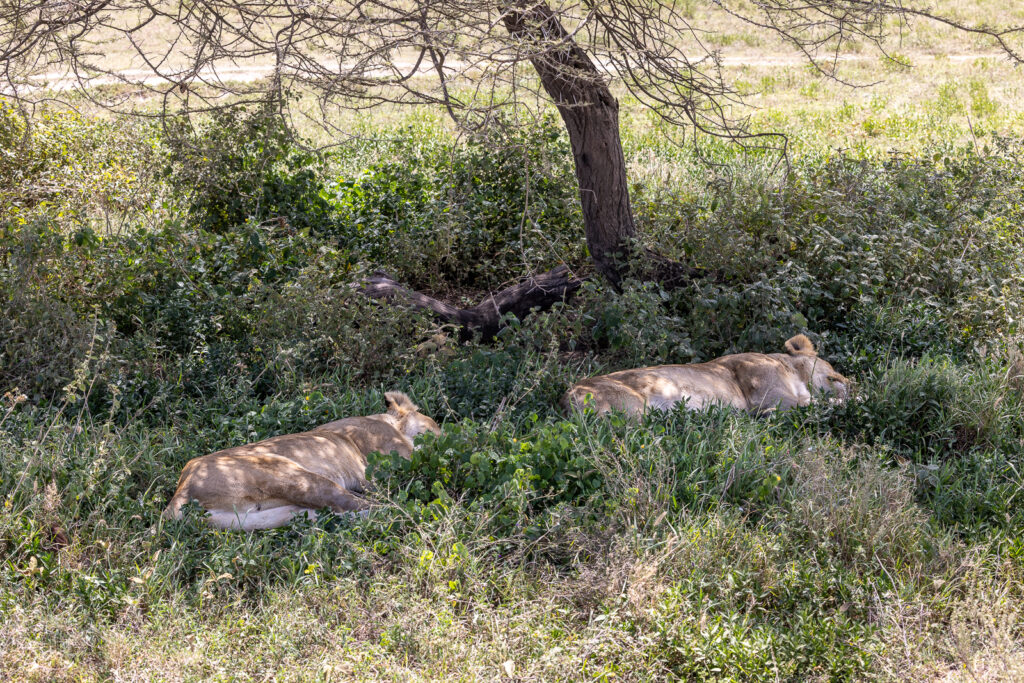
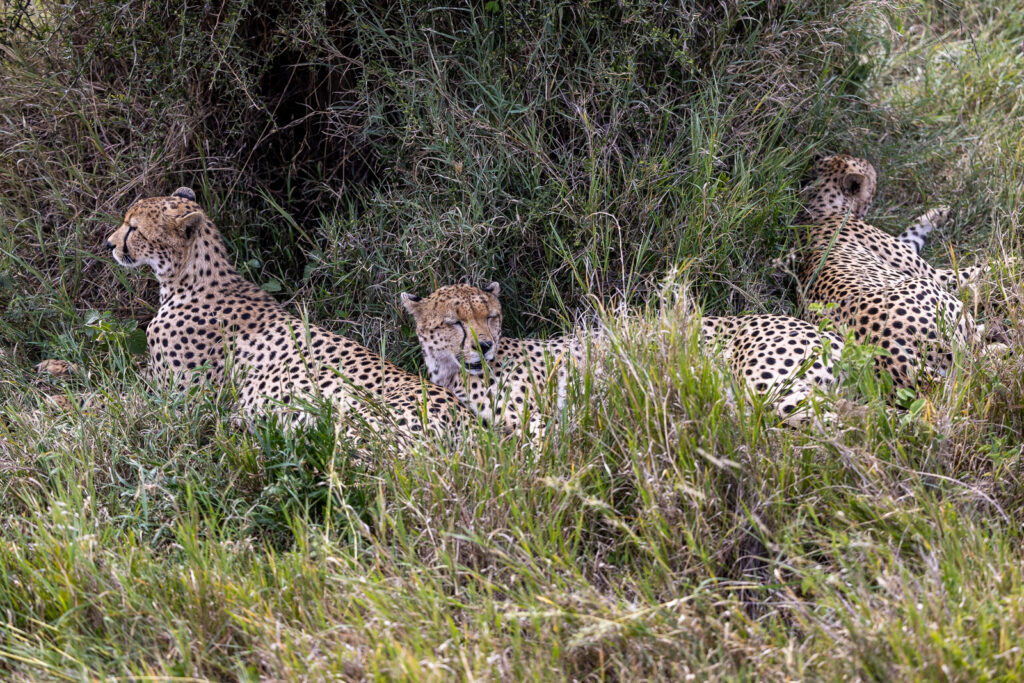
We found lions in two places, resting under trees. A short distance later we came across three male cheetahs sleeping under a bush. This sighting turned into a madhouse as a dozen or more vehicles tried to maneuver for a view.
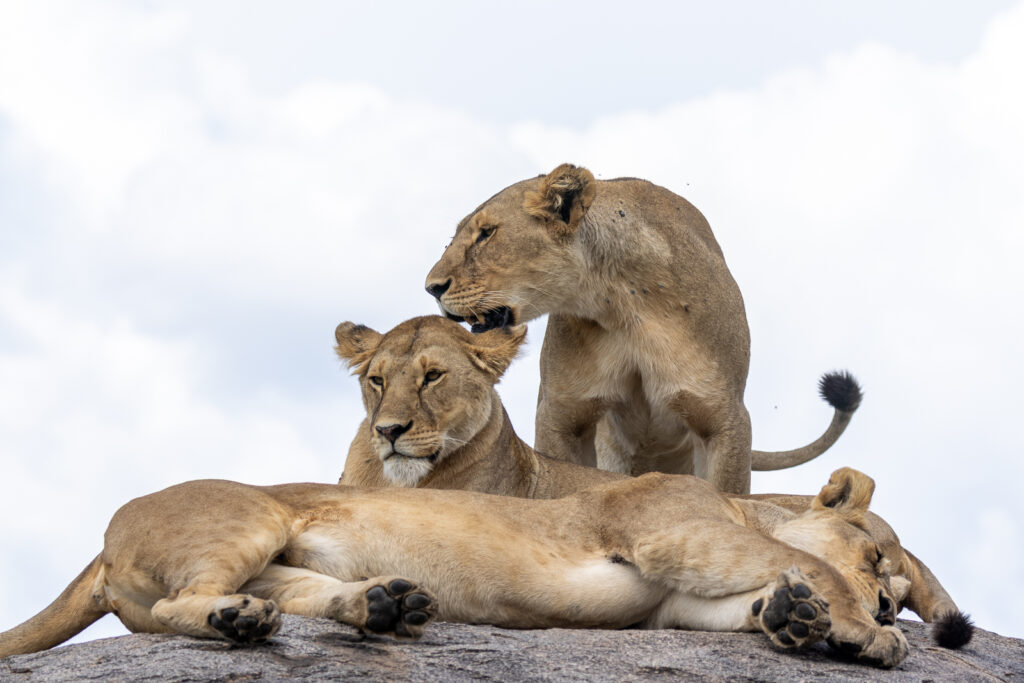
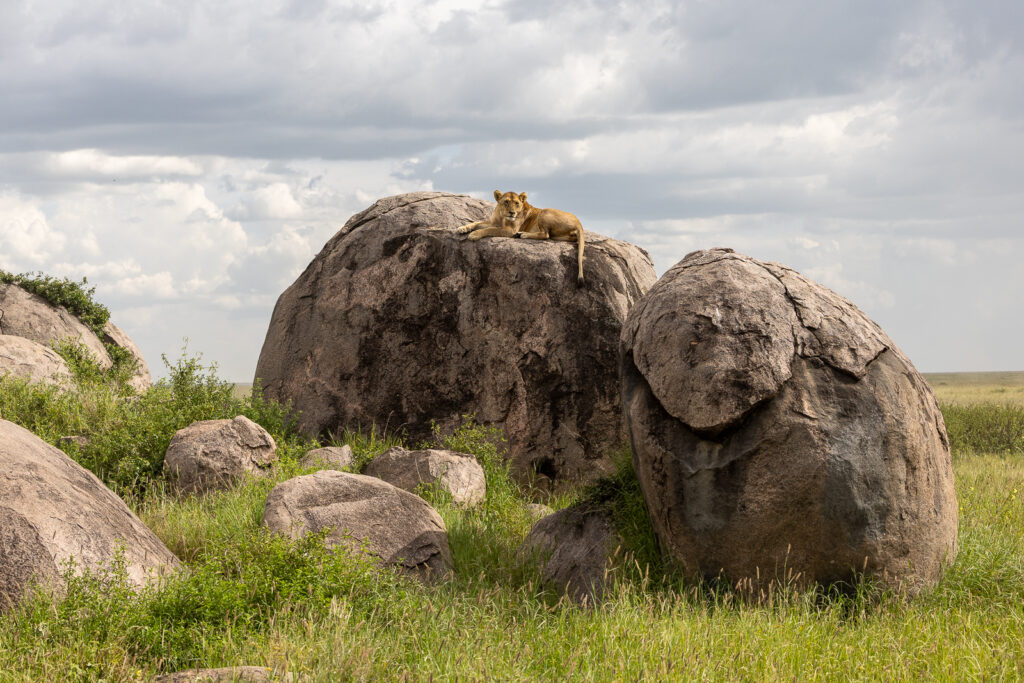
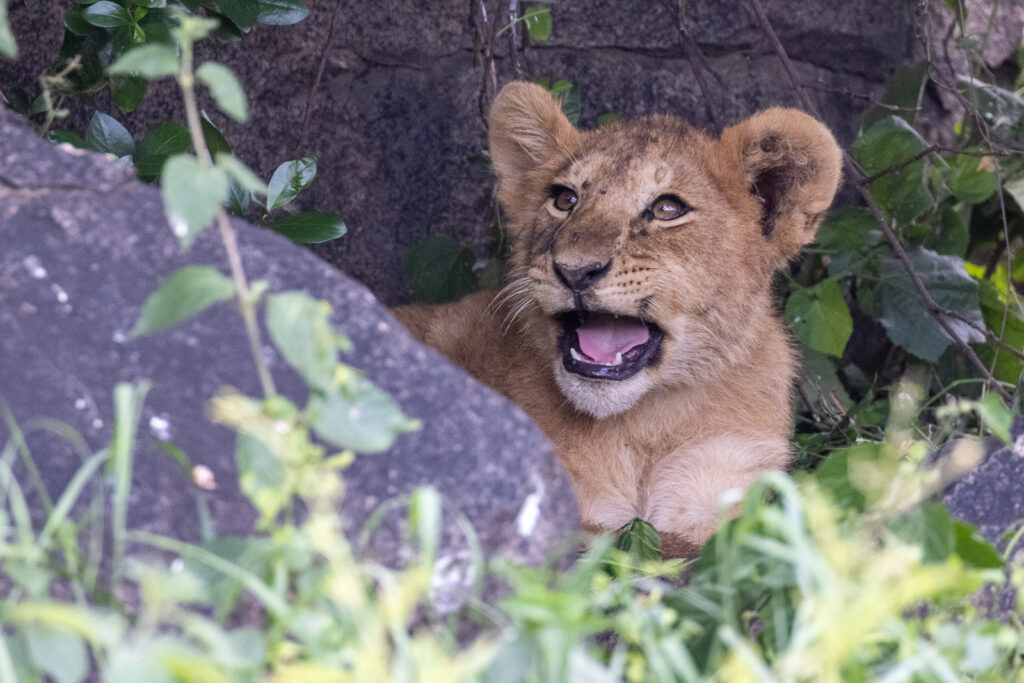
A large pride of lions was then spotted in a rock outcrop, adults and cubs scattered across the rocks and vegetation. Numerous vehicles were circulating but everyone was courteous, taking turns and allowing space. There were so many lions in photogenic positions that good shots were easy to find.
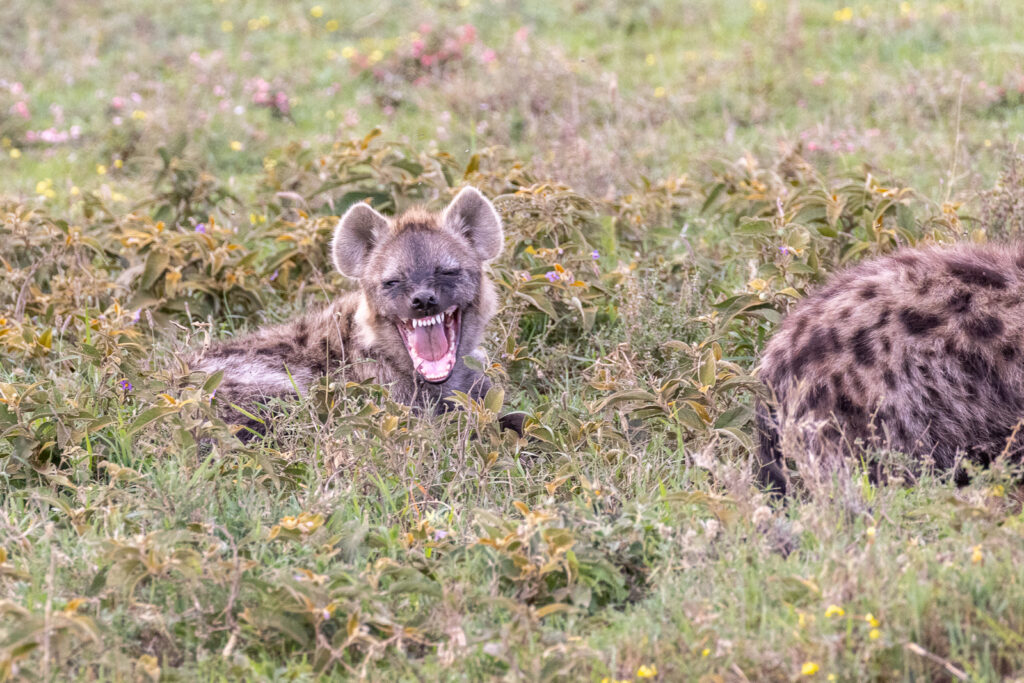
After the pride we started back toward Woodlands Camp on the other side of Naabi Hill Gate. It began to rain and Benjamin drove quickly, as the roads can turn muddy very fast. Fortunately the rain did not last and we continued at a more leisurely pace. Before reaching camp we found a hyena den with about eight individuals, including a young one at the entrance.
We reached camp at 5:30.
Day 5
Morning Game Drive
Another beautiful sunny morning. We left camp at 7 and headed through the plains just south of Naabi Hill Gate toward the southern Serengeti, also referred to as Hidden Valley. On the plains we drove through a large herd of wildebeest and zebra and spent time photographing them. We also found a pair of jackals.
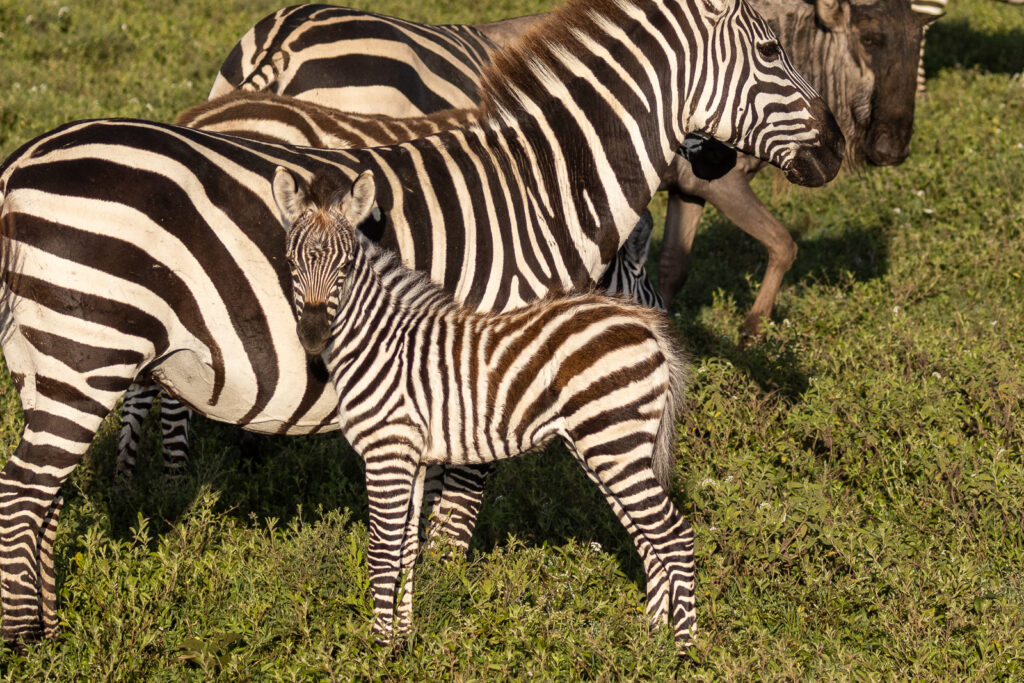
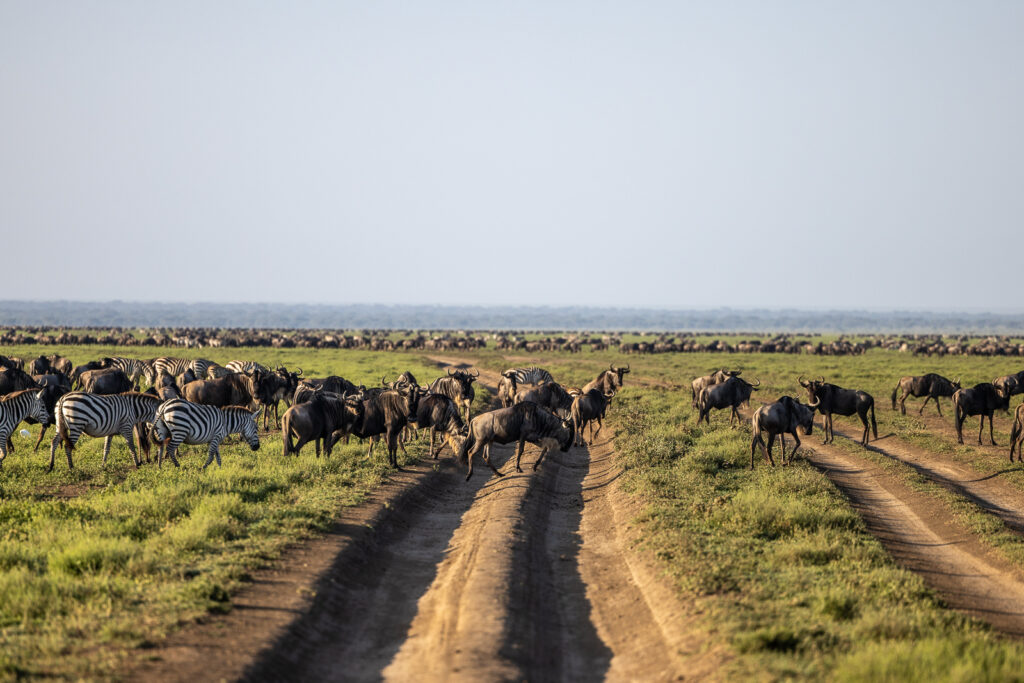
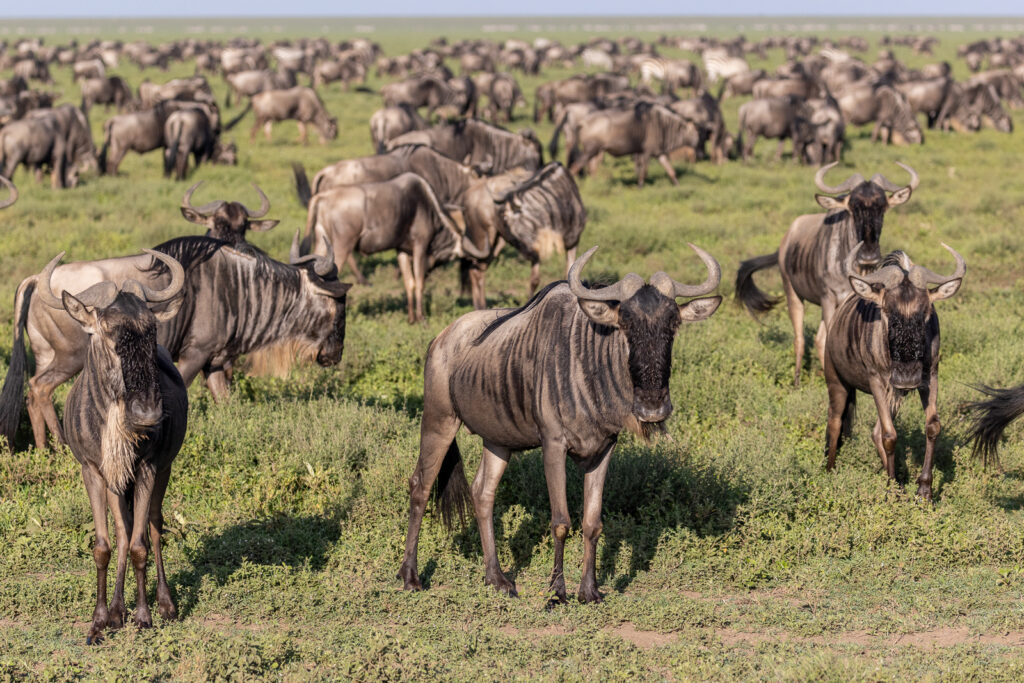
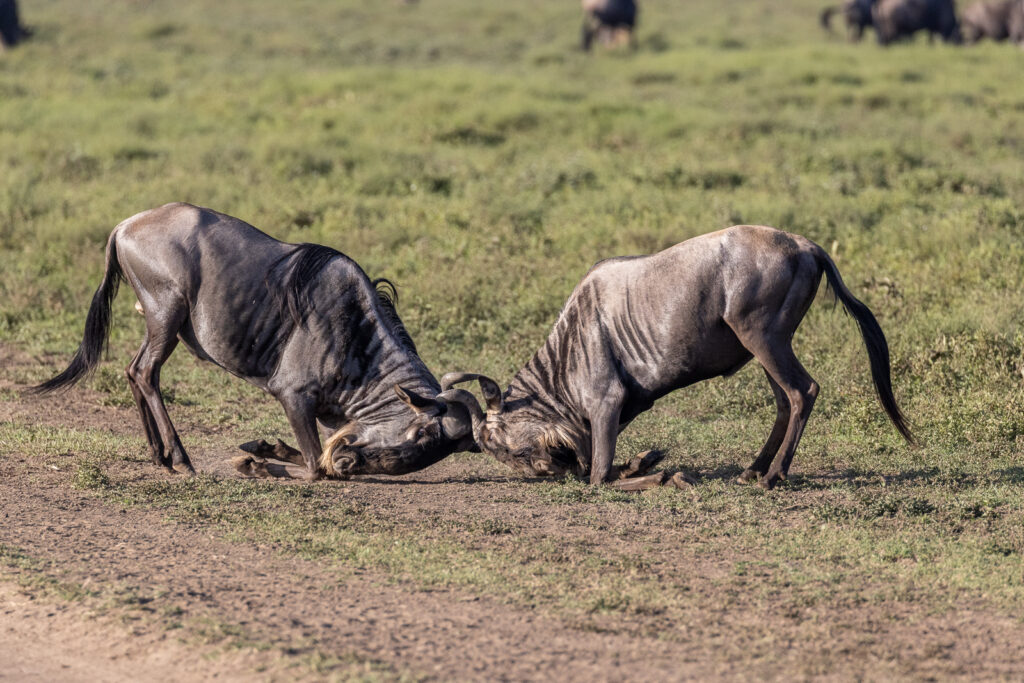
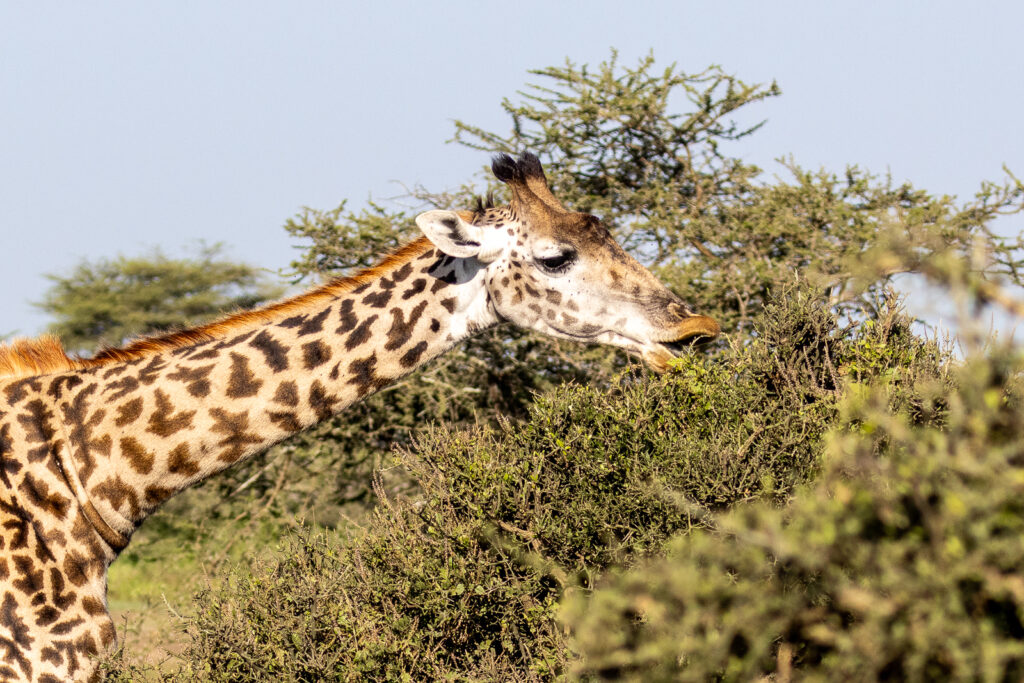
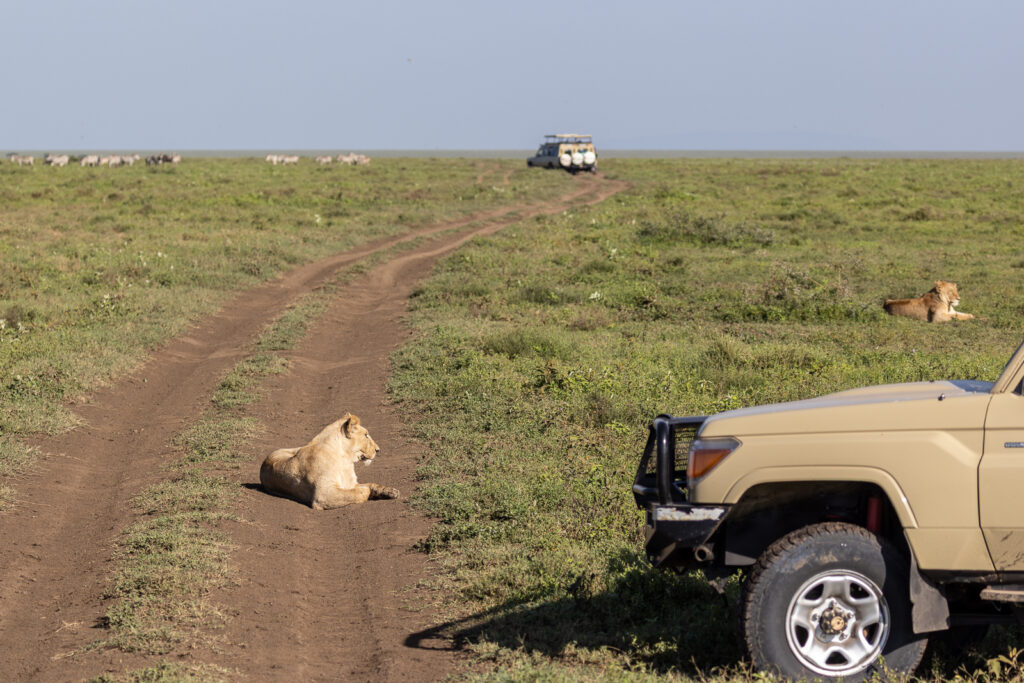
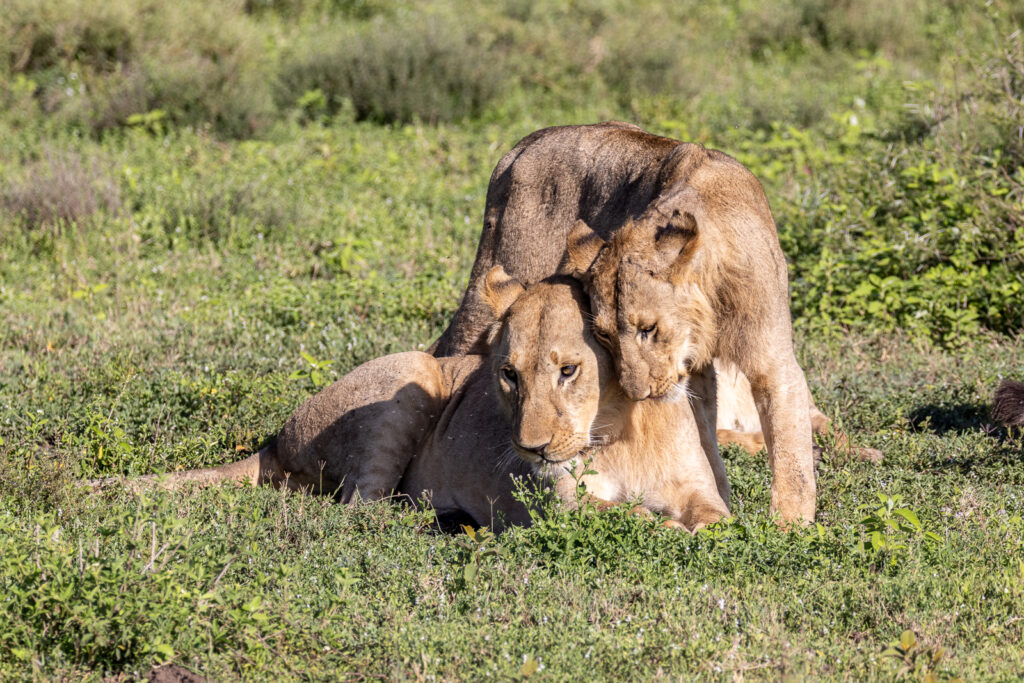
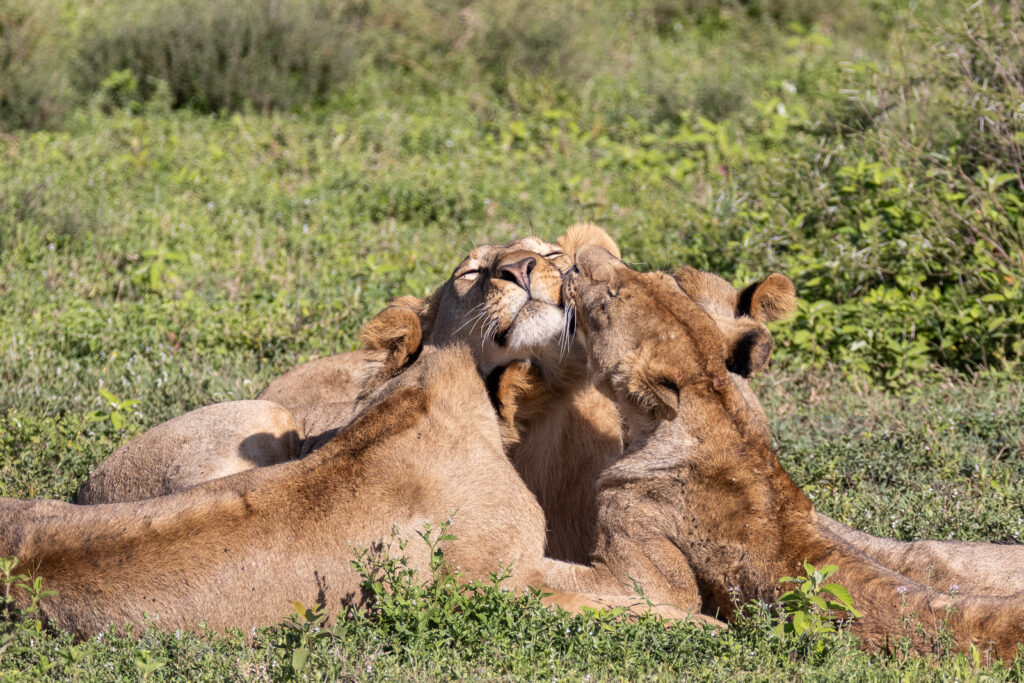
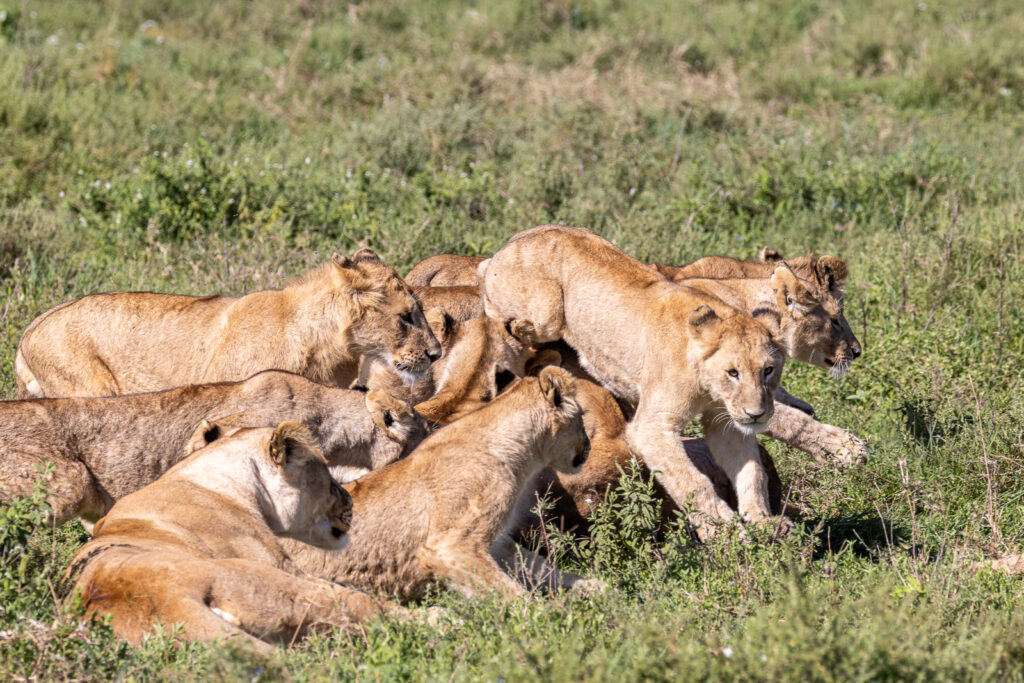
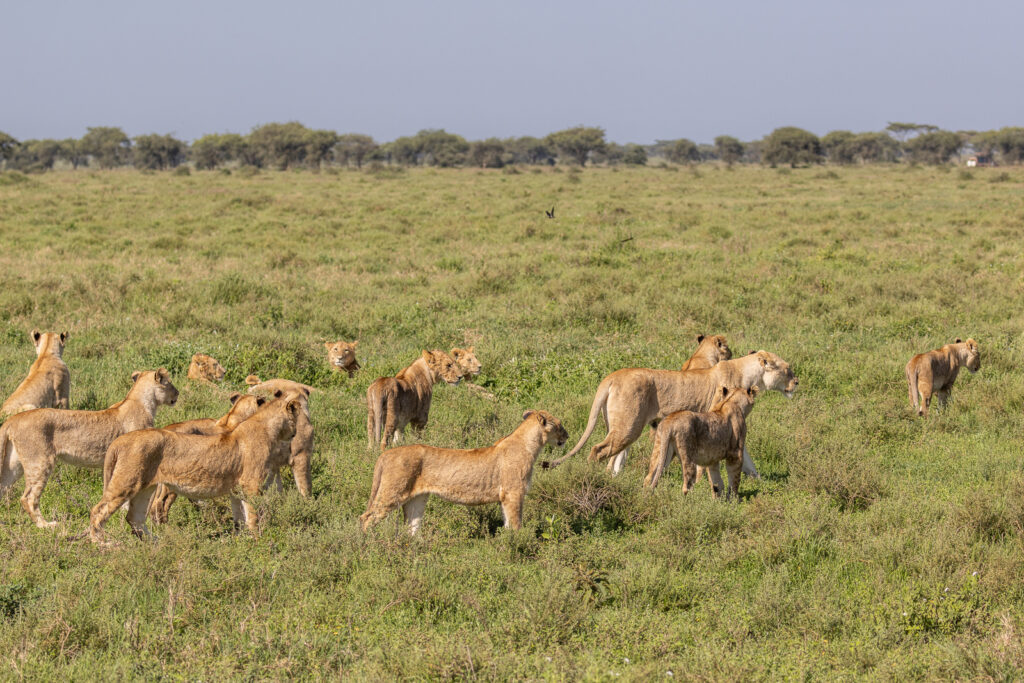
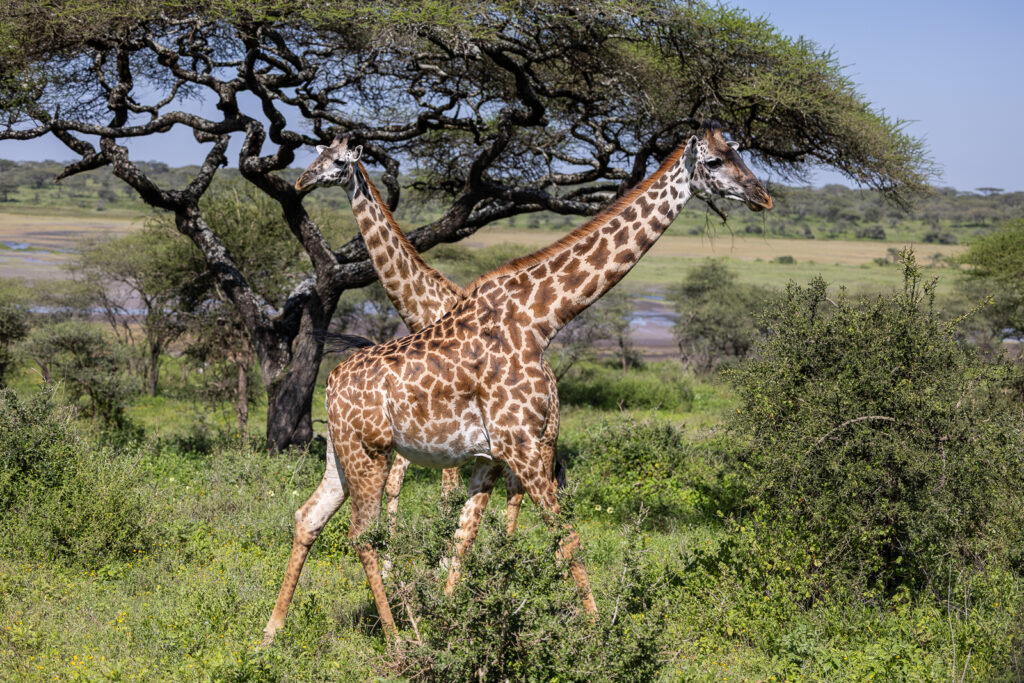
In the forested area farther south we began seeing giraffes and soon encountered a large pride of lions lying in the grass. Several other vehicles were there but it was not nearly as crowded as central Serengeti the day before. Not far from the lions was a herd of zebra and wildebeest.
Crossing the short-grass lands again we found another group of vehicles watching an even larger pride of lions, about sixteen individuals. They were also lazing in the grass until one vehicle got too close and startled them.
Crossing back toward the forest we nearly drove over a fox at its den. It darted back down quickly. We also came across a hyena lying under a bush.
On a report of a leopard in a tree we joined a few vehicles and found a small leopard sleeping high in the canopy. It was our first leopard of the trip but inactive and difficult to photograph.
By now it was time to head back to camp for lunch. After the rains the night before some areas were muddy and a couple of small bridges were out, making the drive slow. We eventually returned to the main road toward Naabi Hill Gate, passing again through the same herd of zebra and wildebeest we had seen that morning. We arrived back at camp at 1 p.m.
Afternoon Game Drive
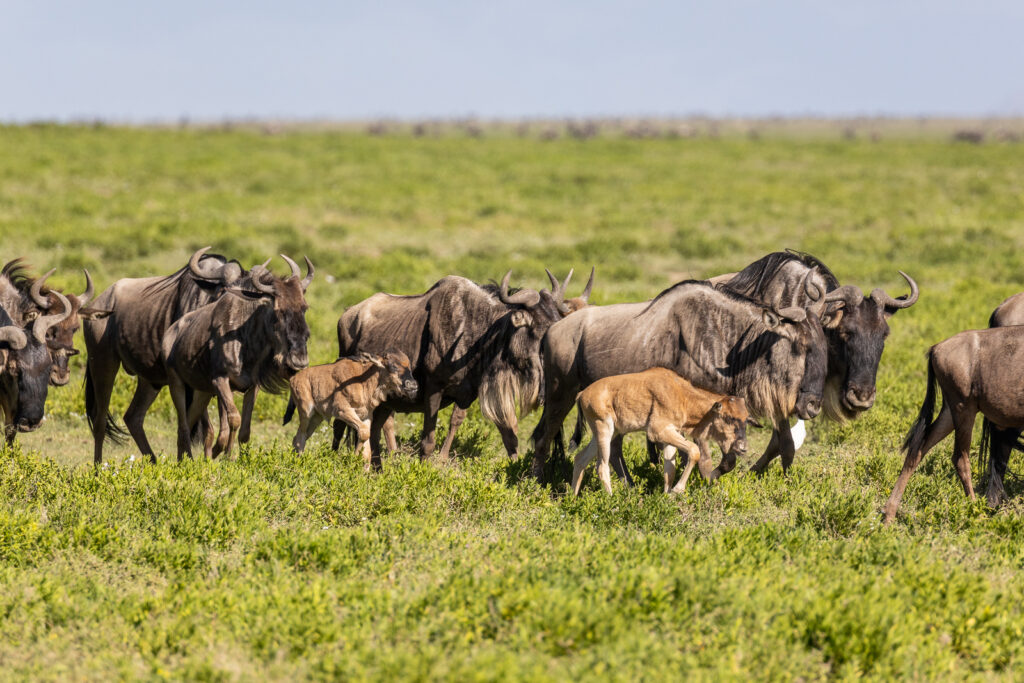
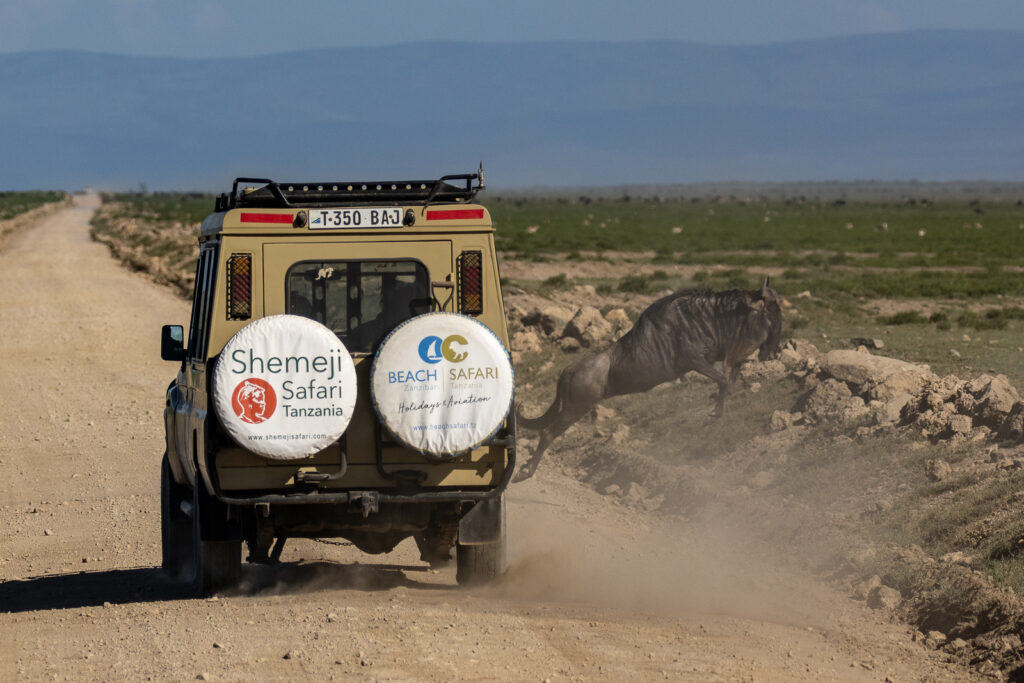
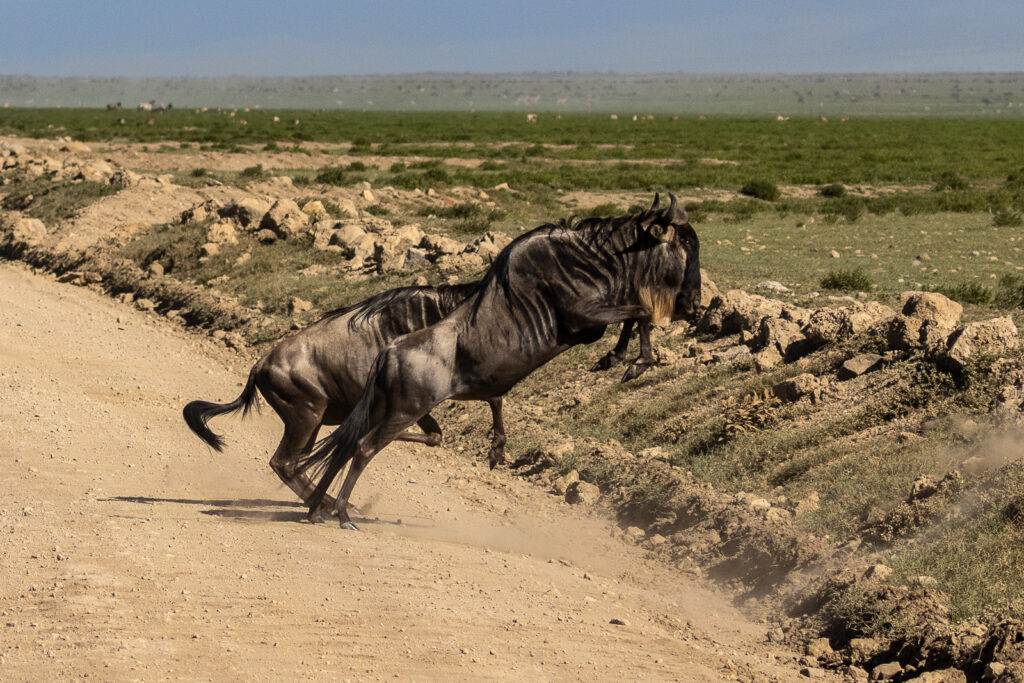
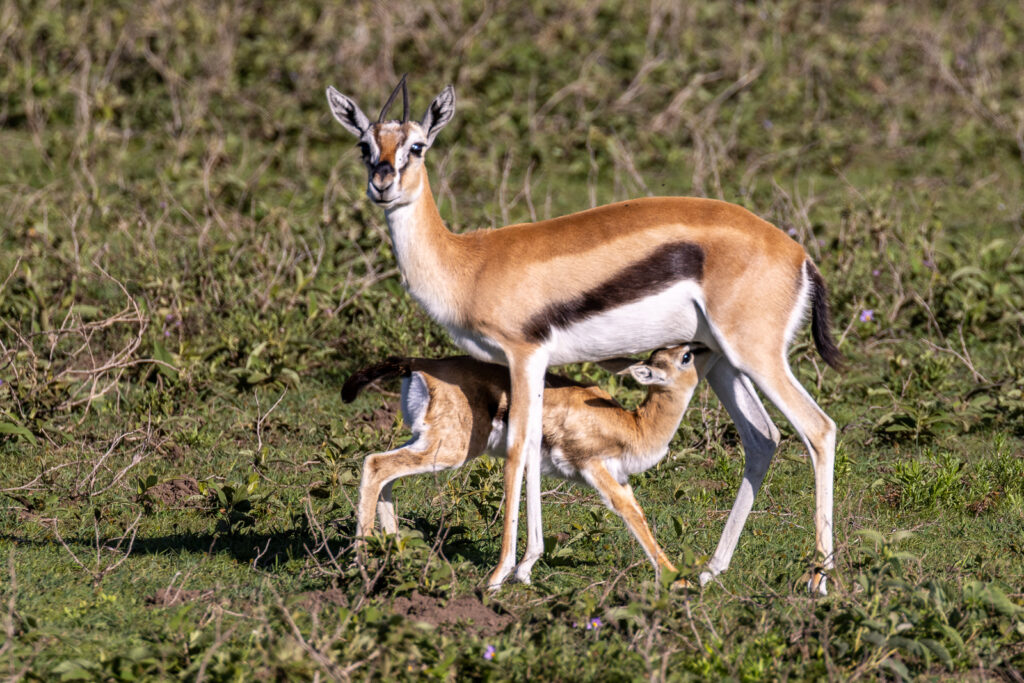
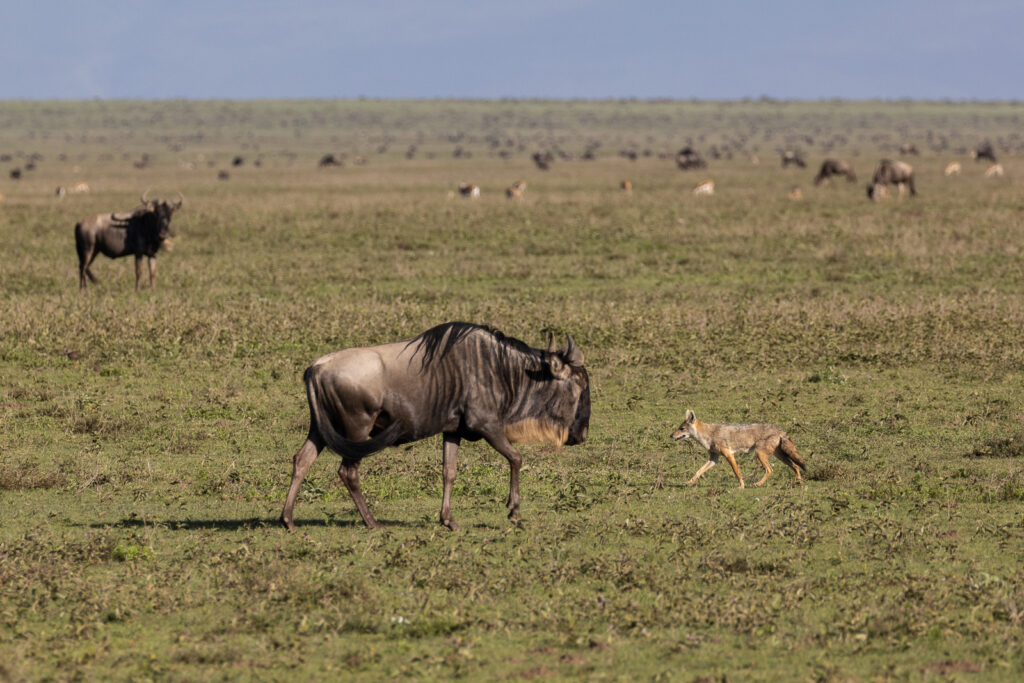
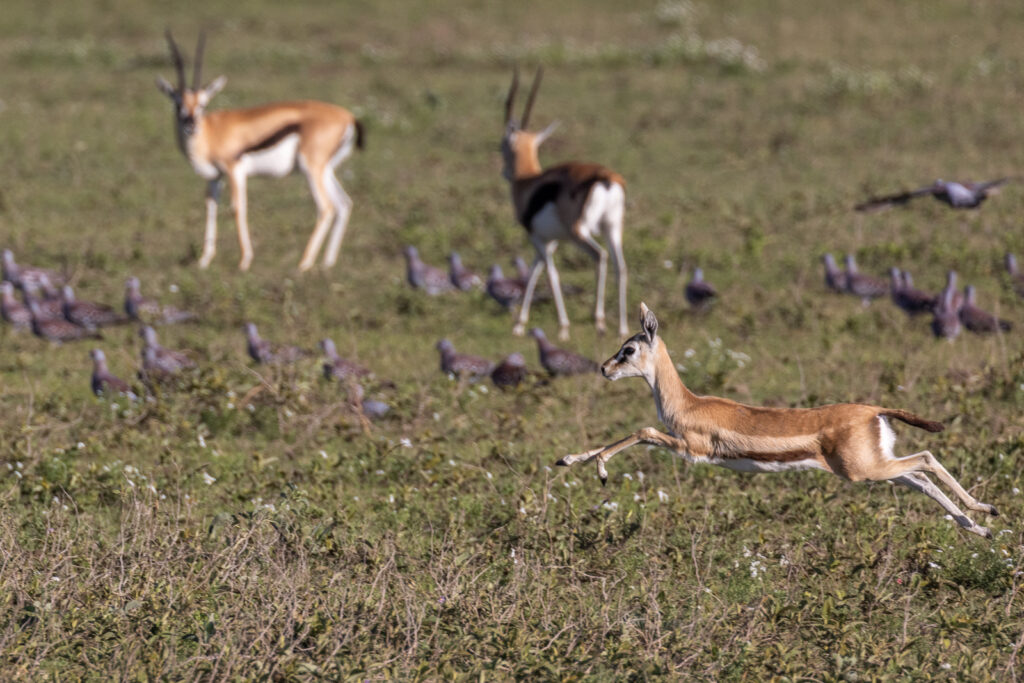
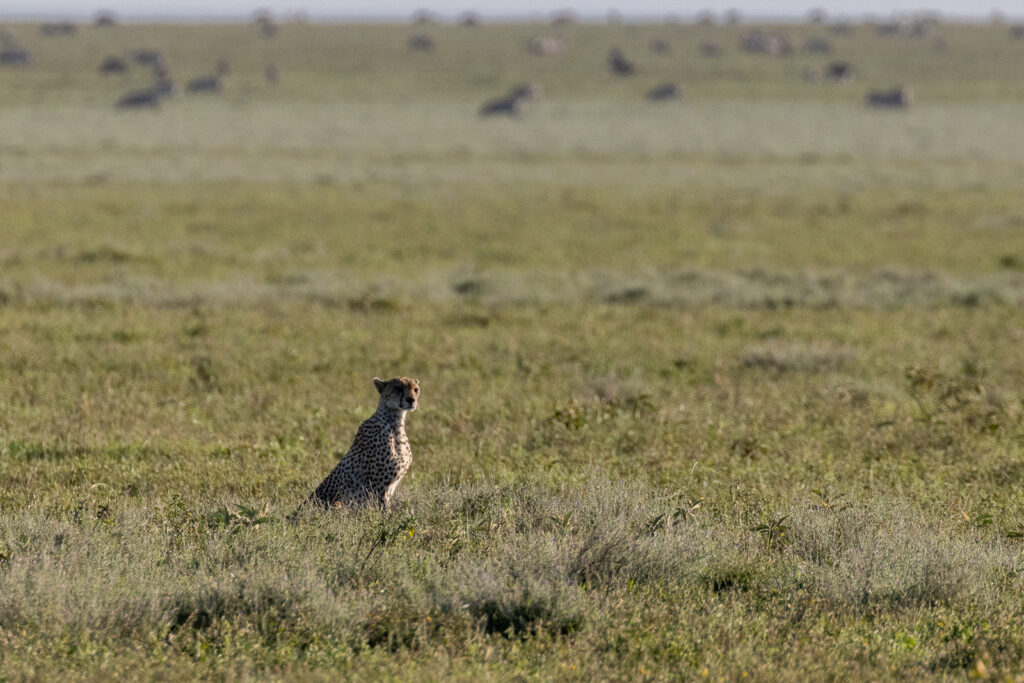
We left again at 4 for the southern Serengeti. This time we returned to the south gate we had passed coming from Ndutu. From the gate we followed a smaller road along the border of the Ngorongoro Conservation Area. The drive was entirely through short-grass plains with scattered herds of wildebeest and gazelles. The groupings were smaller than in the morning and we saw only a few zebra. Other sightings included a hyena, a jackal, distant lions, eland and at the end a lone cheetah at a fair distance. Along these roads vehicles are not allowed to leave the tracks to approach the animals.
There were fewer clouds this evening than in previous days and the light was pleasant.
Serengeti Woodlands Camp
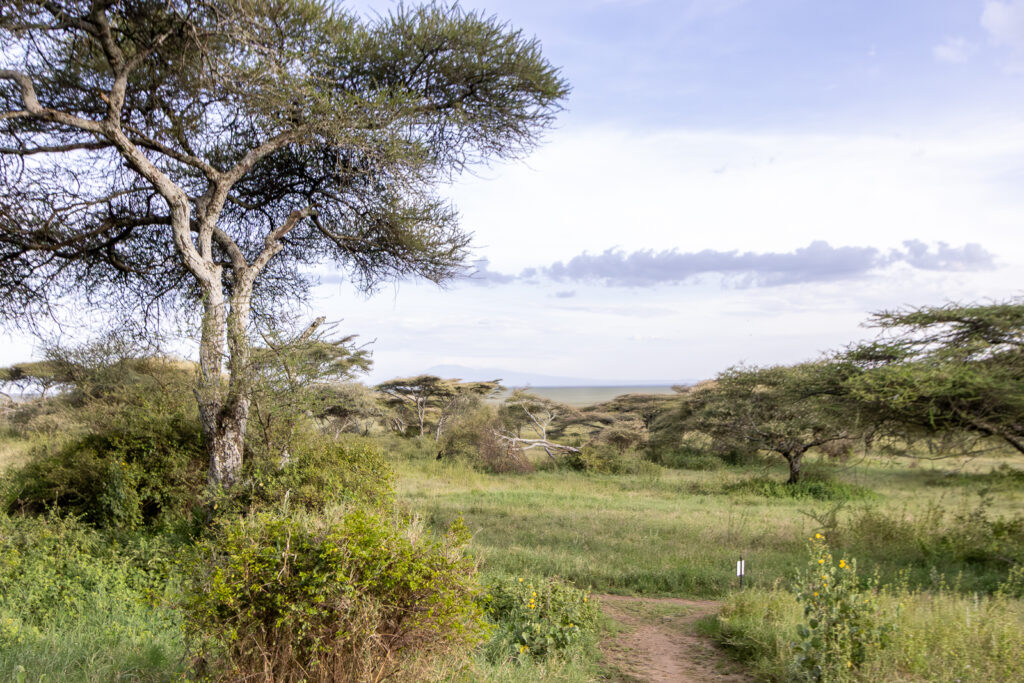
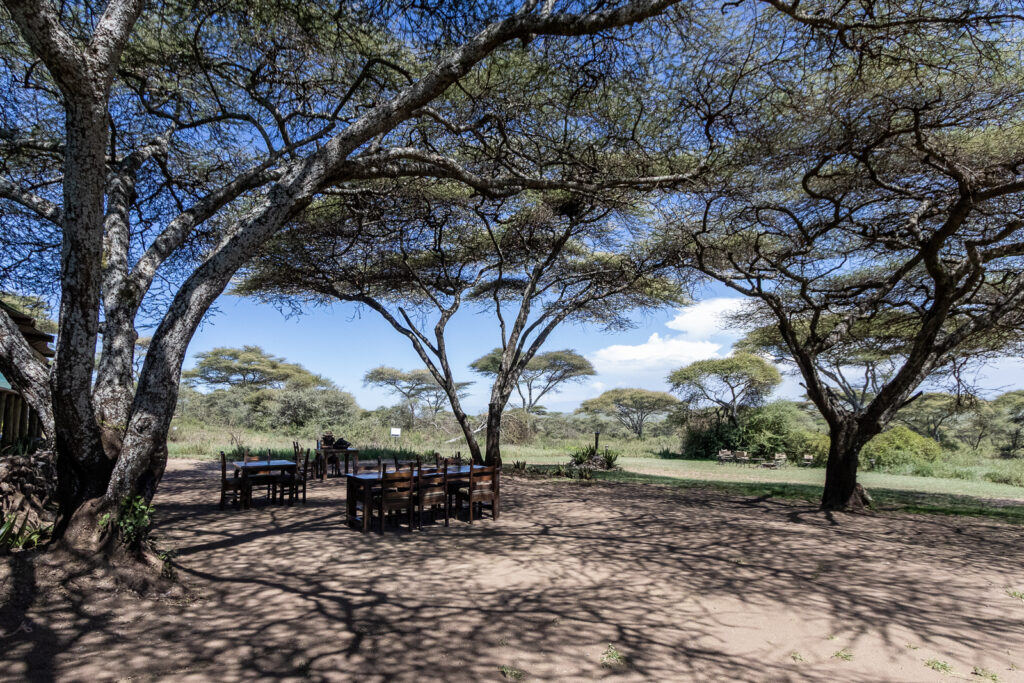
Serengeti Woodlands Camp is a step up from the previous camp. There are fifteen tents, including two family tents, set in the woods with views over the plains toward southern Serengeti.
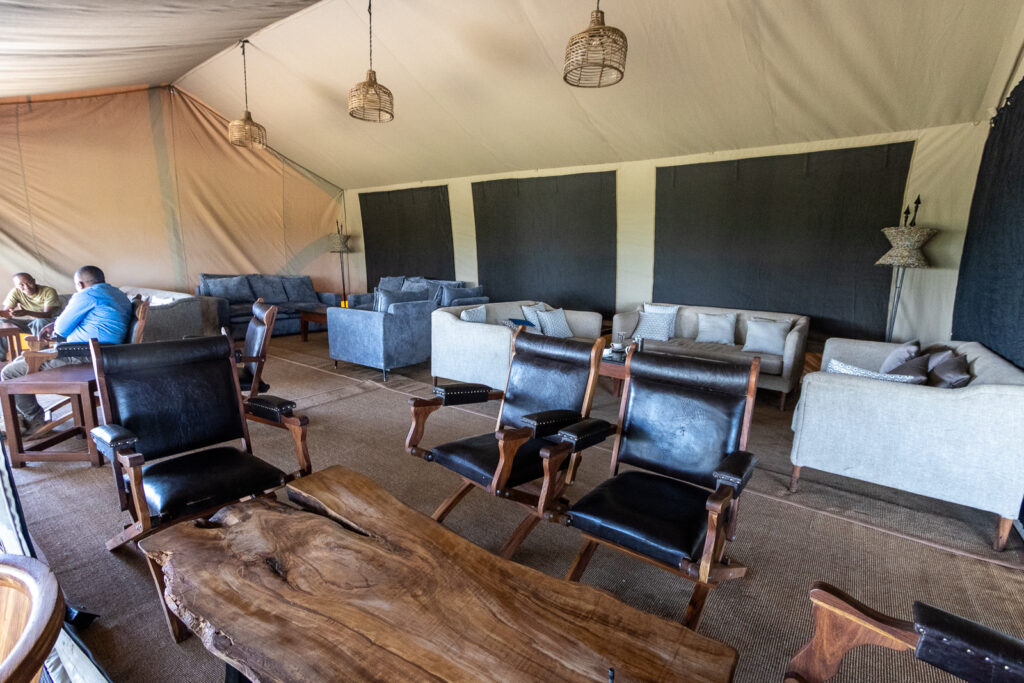
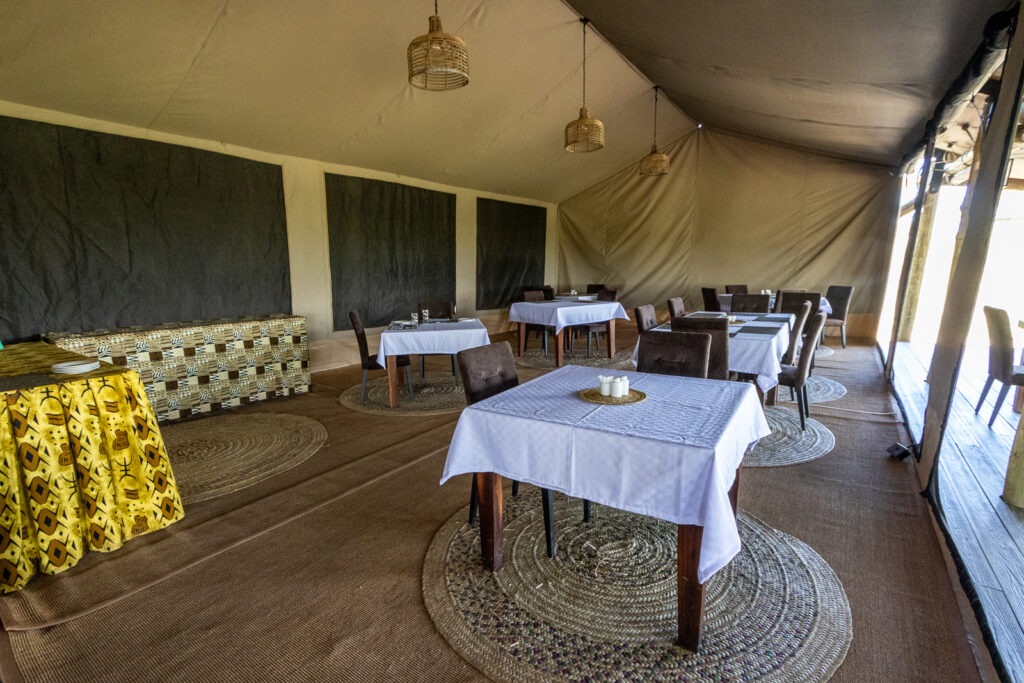
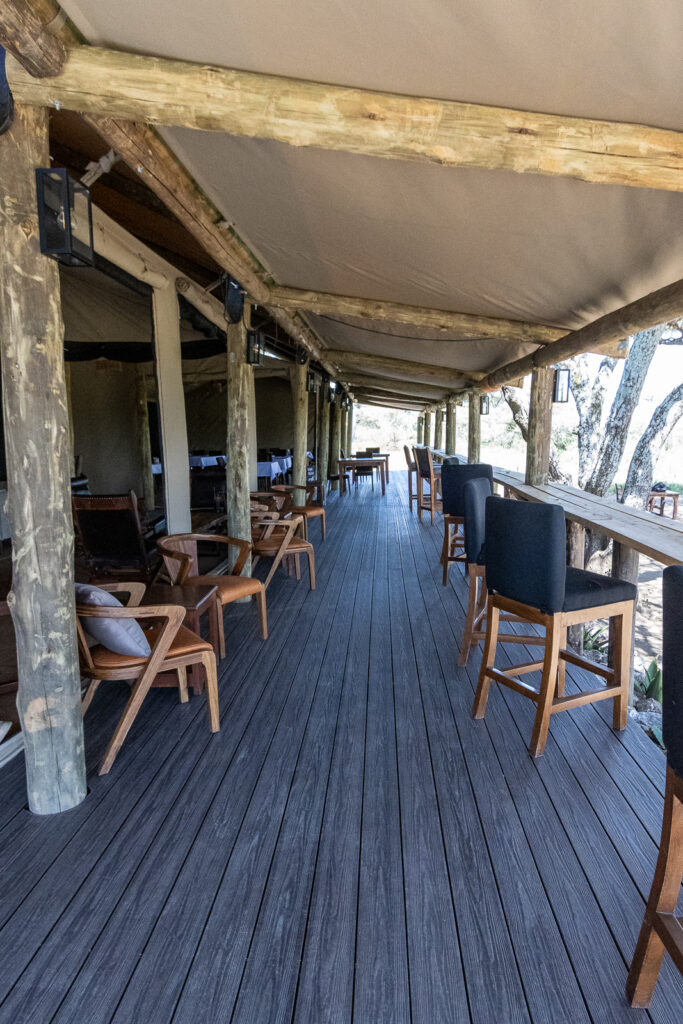
Common areas include a lounge with plenty of comfortable couches and chairs. A long bar overlooks the plains with seating along the front of the lounge and dining room. It is a pleasant area to relax in the evenings. The dining room is spacious with tables dressed in white tablecloths and is also open to the view. The lounge and dining room have strong Wifi, though the camp was not full during our stay so the connection was not tested under heavy use.
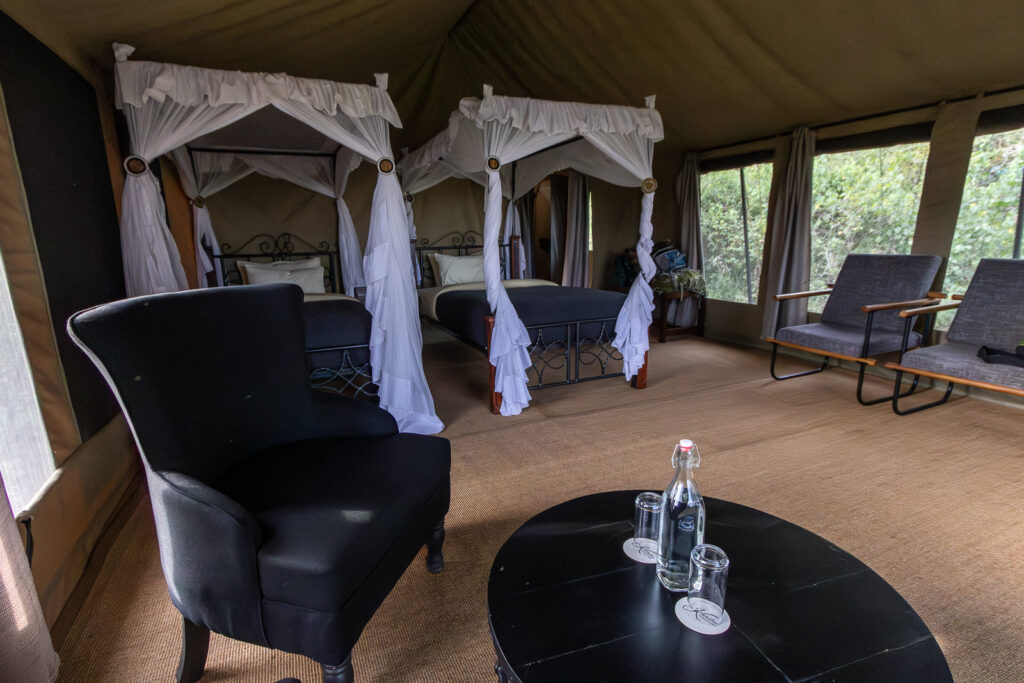
Our tented room was comfortable, with two oversized twin beds with mosquito netting. The large room was furnished with a desk and chair and two sets of chairs with tables. The bathroom dressing area had open storage and a long counter with one sink. There was a separate toilet room and a separate shower room. The shower water has to be ordered ahead of time. Once delivered the shower had plenty of pressure and enough hot water for a quick shower. There was no safe in the room but at least eight outlets for charging electronics.
Drinks and laundry are included.
Dining
Meals are individually served with a couple of options for starters, mains and desserts.
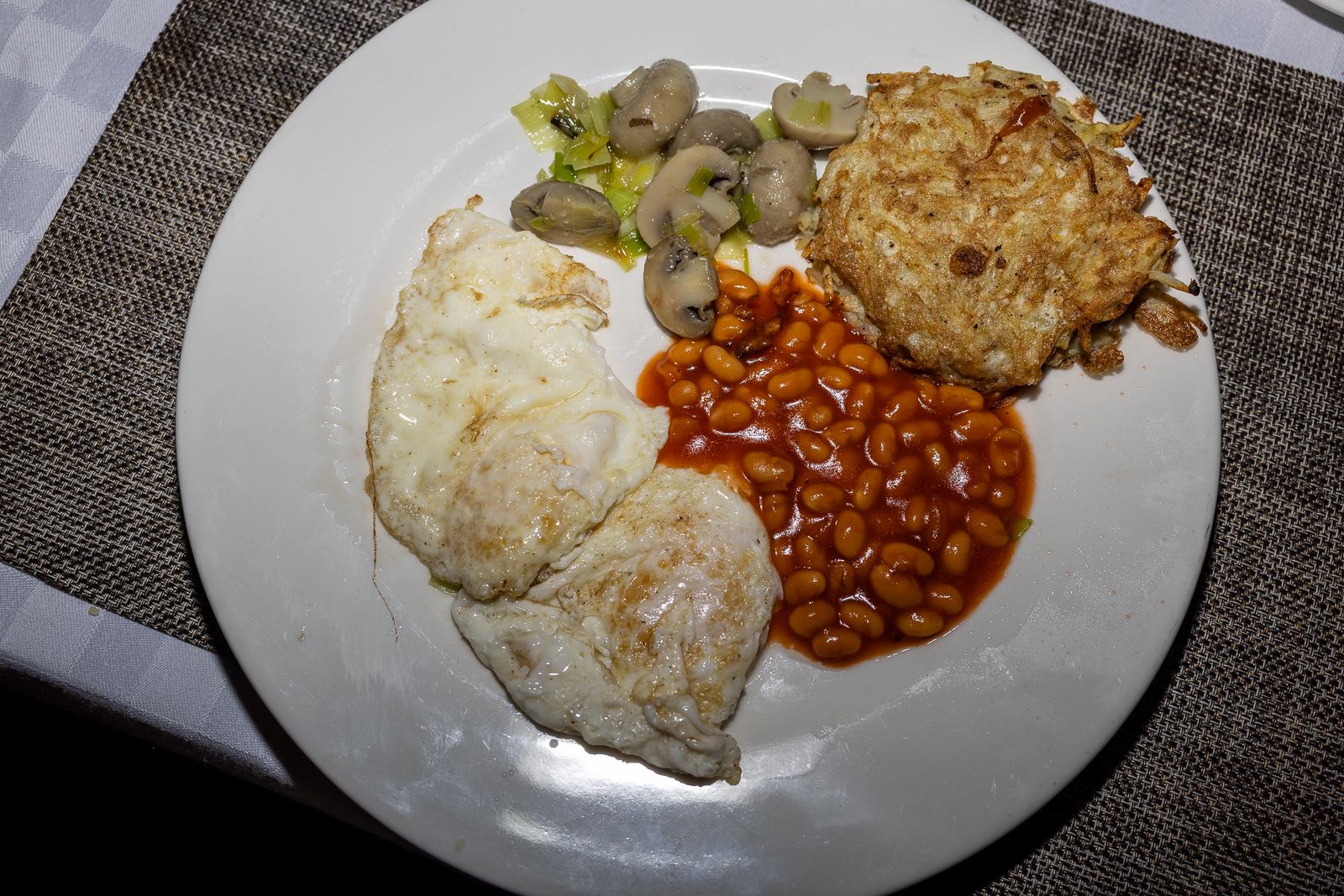
Breakfast is ordered the night before, prepared individually and served to the table. Usual breakfast items were available: cooked-to-order eggs, yams, bacon, sausage, beans, mushrooms, cinnamon rolls, French toast, toast and fruit. One morning giraffes were wandering by as we ate.
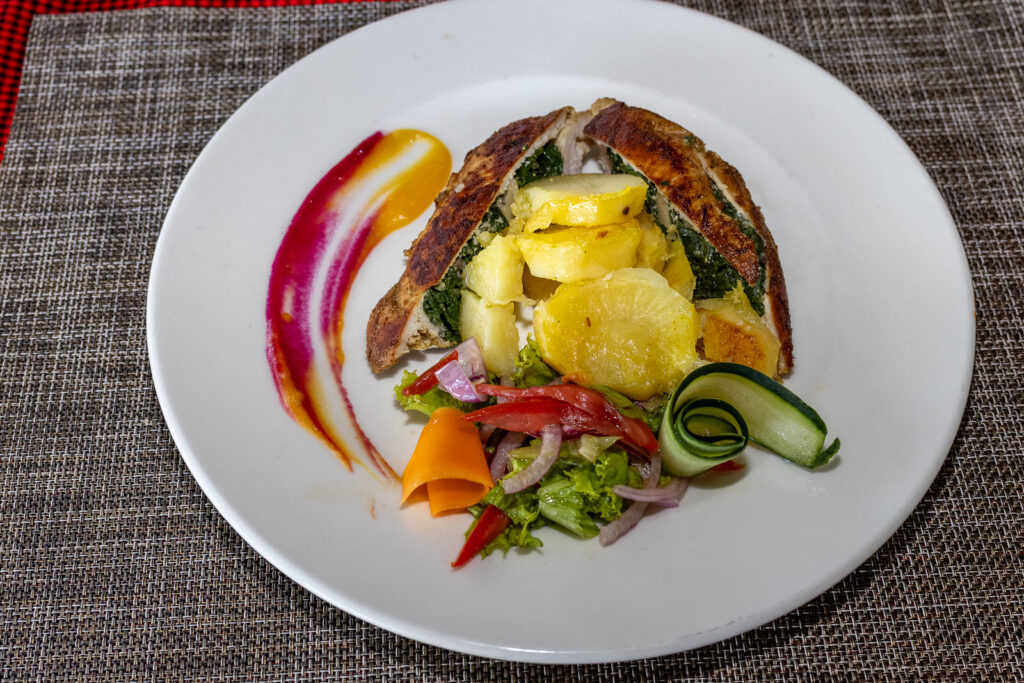
Example lunch was tomato soup followed by a choice of margarita pizza or chicken stuffed with spinach, served with cheesy potatoes and salad. Dessert options were cut fruit or banana fritters.
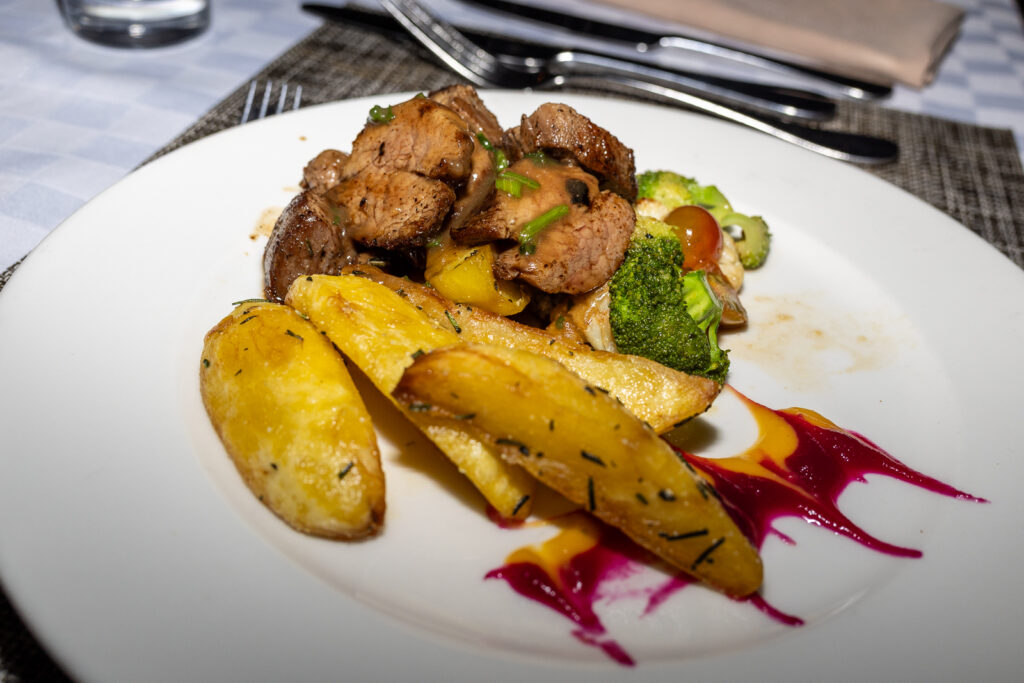
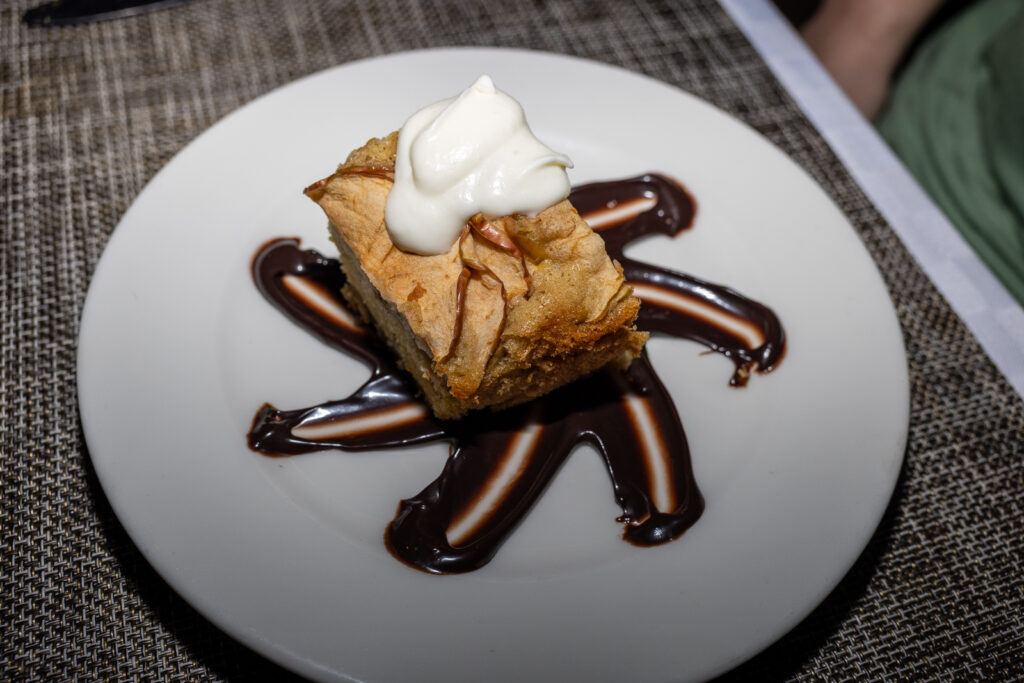
Dinner the first night offered a choice of salad or cream of cucumber soup, then beef, fish or vegetable curry, and cut fruit or apple cake for dessert. I had the cucumber soup and vegetable curry, both very good.
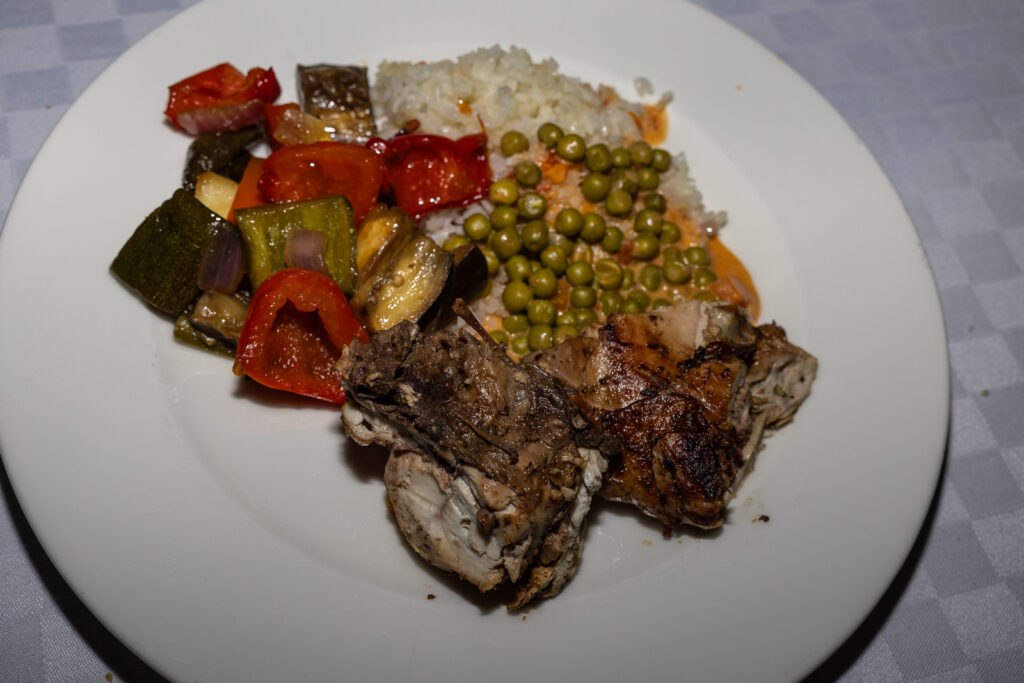
Dinner on the second night was a buffet because more guests had arrived. Dinner began with individually served butternut squash soup. The buffet included peas in sauce, naan, beef stroganoff, rice, sautéed vegetables, barbeque chicken, mashed potatoes and two salads, one with vegetables and orange slices and the other a shredded carrot salad.
Food was generally well prepared although the bread was stale on both evenings.
February 9-11, 2025